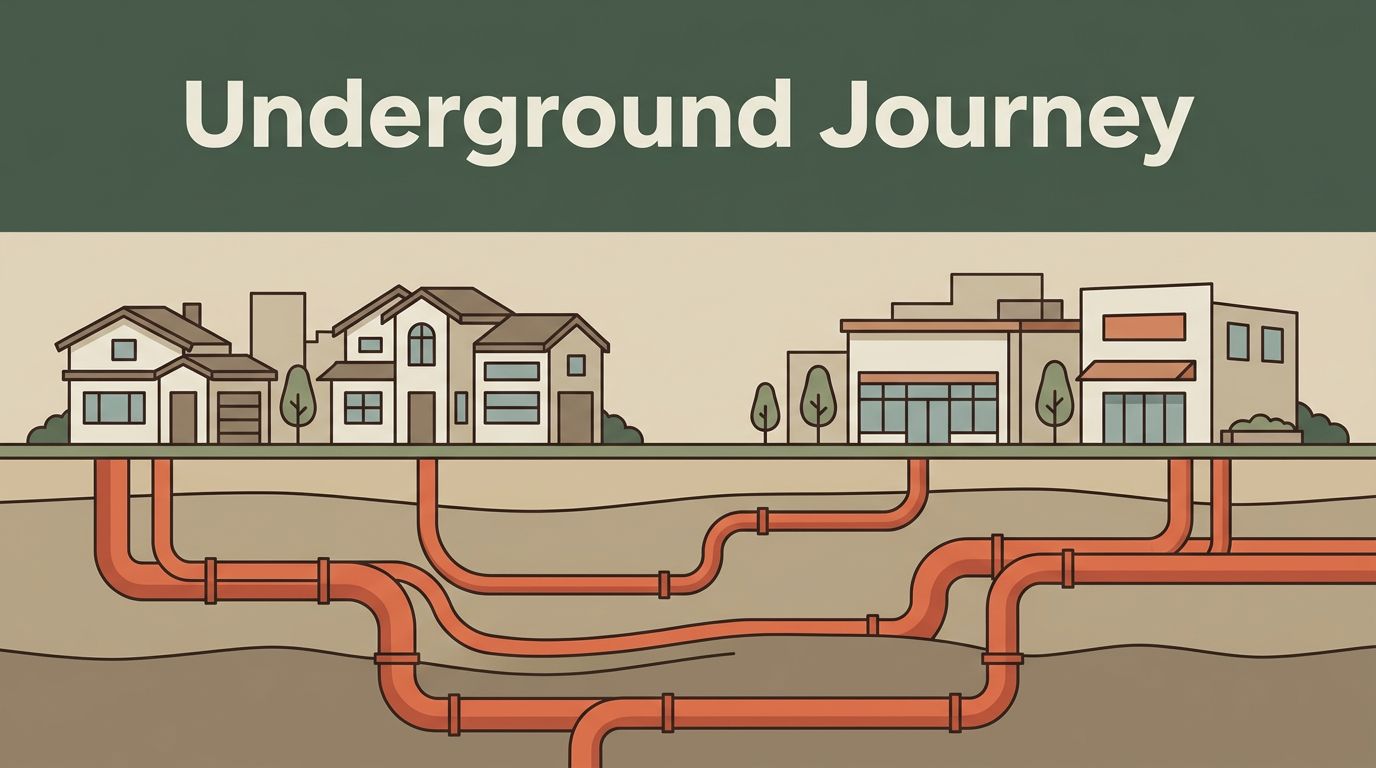
Have you ever wondered how natural gas shows up at your stove, fireplace, or shop furnace? It does not come from a magic pipe that runs straight to your door. It moves through a huge, carefully managed system.
Over 2.8 million miles of underground pipes help carry natural gas across the United States. That flow powers homes, businesses, and power generation, and it accounts for a large share of U.S. energy use. So when you ask how natural gas is delivered to homes and businesses, the answer starts deep underground and ends right at your meter.
You will see the whole route, step by step: extraction and cleaning, long-distance transmission, local distribution, and then the final delivery into appliances. Along the way, safety checks keep the system steady and dependable.
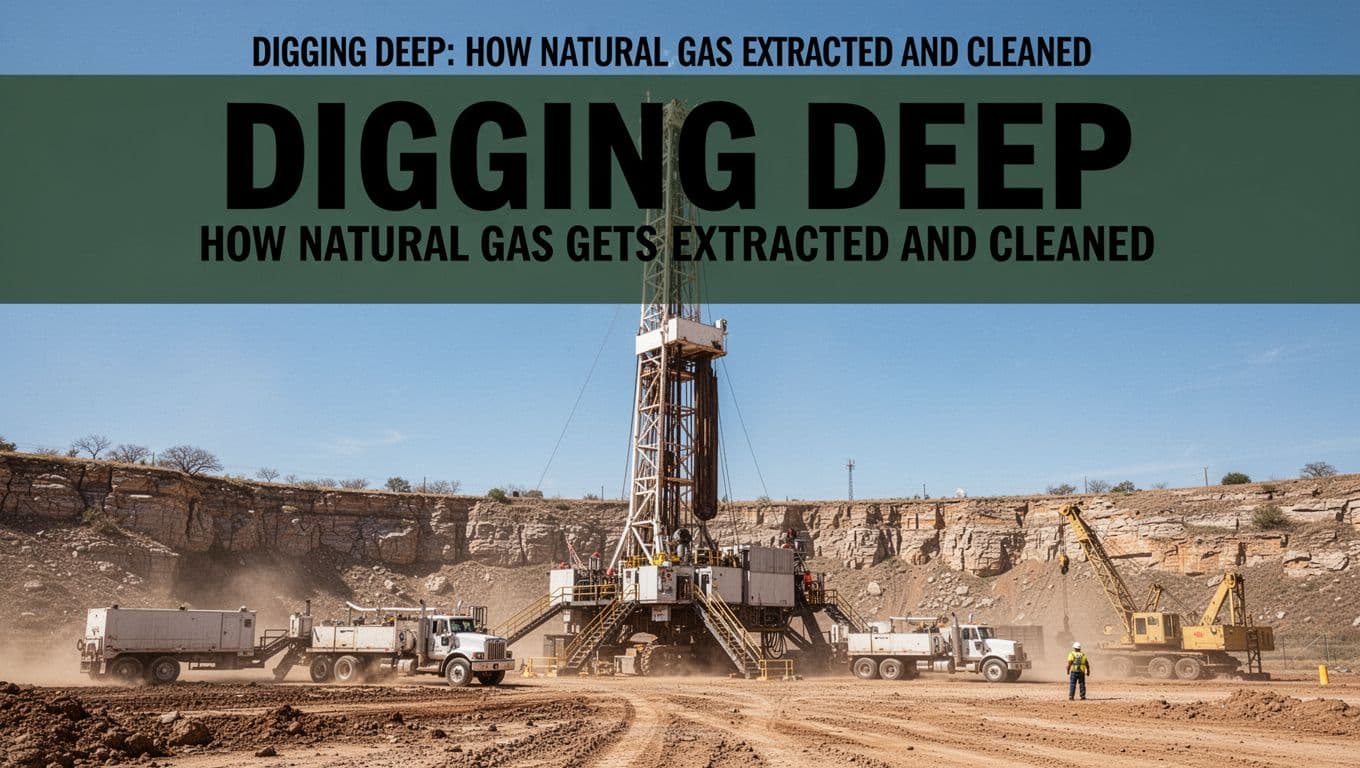
Digging Deep: How Natural Gas Gets Extracted and Cleaned
Natural gas begins where it is found, in underground rock layers or offshore deposits. First, crews drill wells to reach porous formations that hold gas. Then the gas is collected and sent to facilities that remove impurities.
Think of the start like turning muddy water into something you can drink. Raw gas can carry water vapor, oil droplets, CO2, sulfur compounds, and other material. Before it travels far, those extras get removed.
If you want a simple industry overview, the American Gas Association walks through the three delivery segments (production, transmission, and distribution) in a straightforward way: Delivering Natural Gas – American Gas Association.
Drilling Wells into Hidden Gas Reserves
Wells are the starting point of the supply chain. Once a rig reaches the right rock layer, it creates a pathway for gas to move upward. In many places, the gas sits in tight formations. So operators use techniques like hydraulic fracturing to help release gas from the rock.
As the gas rises, it is not “ready” for your home. It still carries unwanted stuff. That is why the next step matters so much. Otherwise, those impurities could damage equipment or create risks during long-distance transport.
From here, gathering pipelines collect gas from multiple wells. They bring the gas to a processing plant where it gets cleaned before it goes anywhere near high-pressure transmission lines.
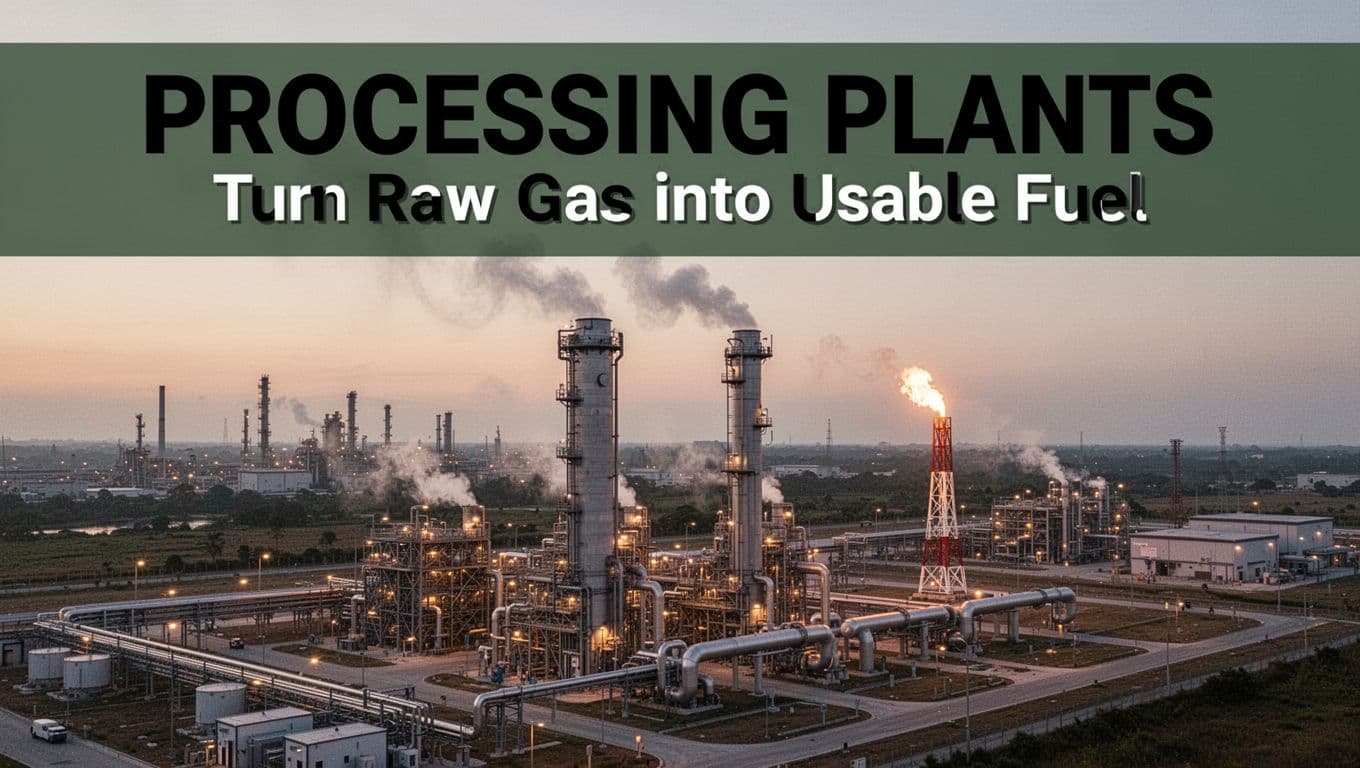
Processing Plants Turn Raw Gas into Usable Fuel
Processing plants act like a filter and conditioner. They separate natural gas from contaminants, including water vapor, CO2, and sulfur compounds. Operators also remove liquids that could cause trouble inside pipes.
The goal is pipeline-quality dry gas, which is mostly methane. Once the gas meets quality specs, it can handle the long travel through transmission systems.
If you like a “from underground to your doorstep” summary, Enbridge published a clear walkthrough of the consumer delivery path. It covers production, cleaning, transmission, and local delivery in one PDF: How natural gas gets to consumers (PDF).
Cleaning is what makes the next steps possible. After that, gas moves like a controlled flow, not a messy mixture.
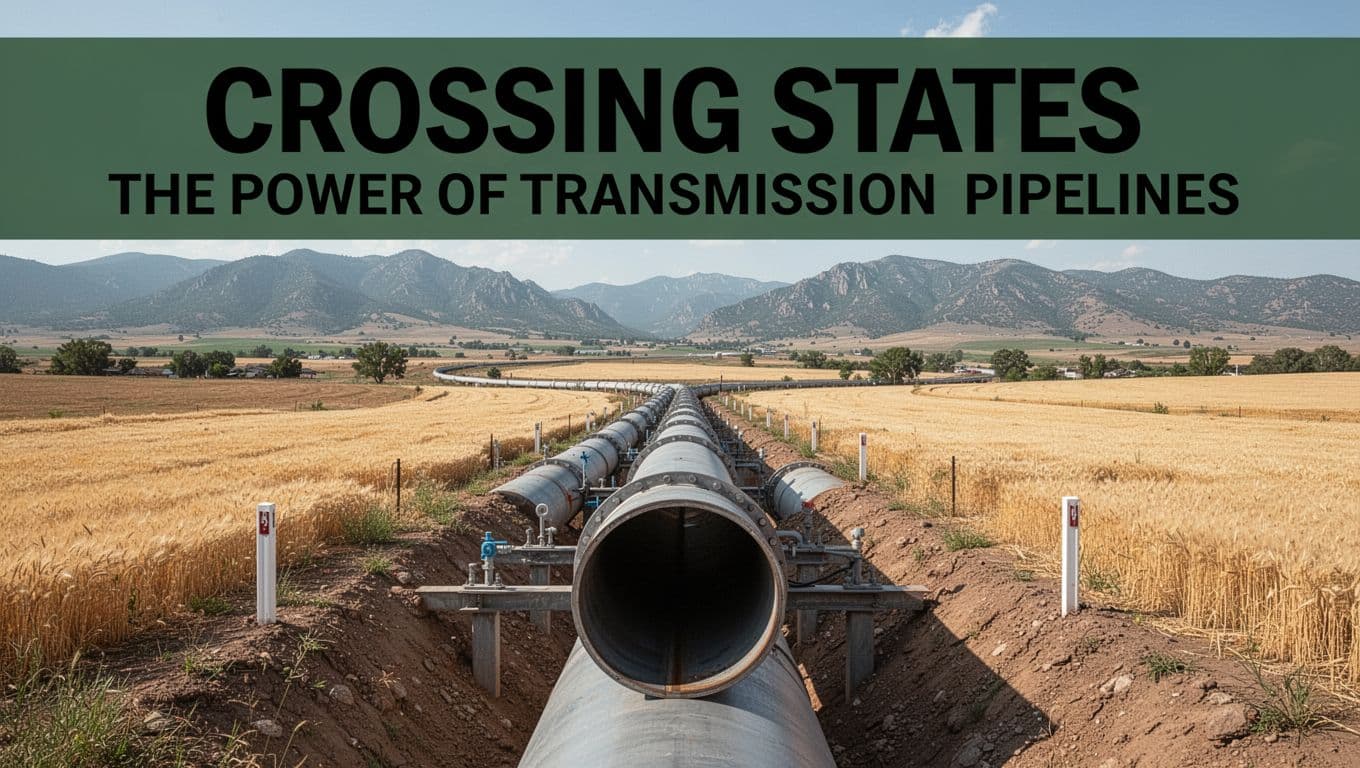
Crossing States: The Power of Transmission Pipelines
Once the gas is cleaned, it enters the big network: transmission pipelines. These pipes carry gas across state lines and between major regions. They run long distances because that is how supply and demand balance out across the country.
Transmission lines move gas at high pressure. Pressures often fall in the 200 to 1,500 psi range, depending on location and system design. Pipe diameter can be huge too, sometimes up to 42 inches. That size matters, because it helps move massive volumes efficiently.
Compressor stations keep the system moving. They boost pressure after the gas travels far enough that friction and distance slow it down. In many systems, you will find compressors roughly every 40 to 100 miles.
Finally, the gas can also pause at storage sites or keep moving toward major users. Some large facilities, like big power plants, may connect closer to transmission lines.
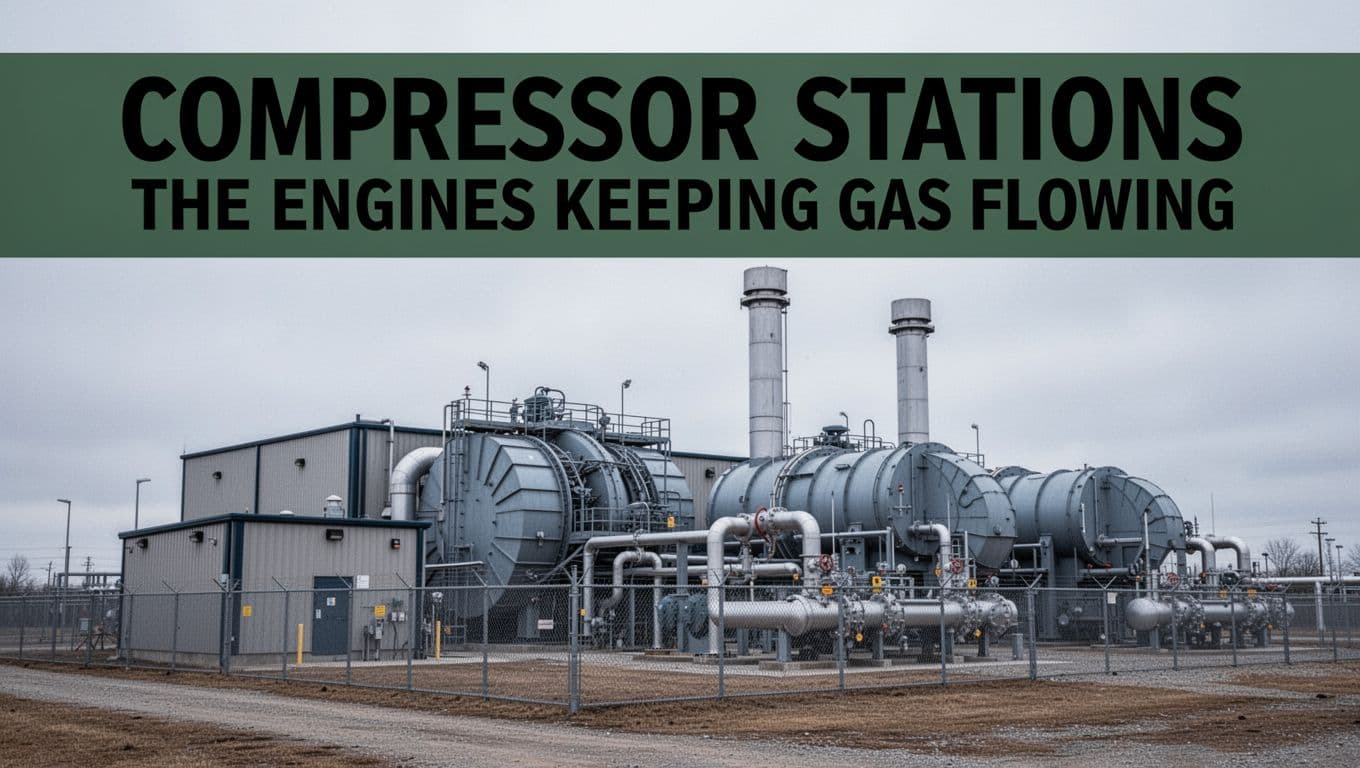
Compressor Stations: The Engines Keeping Gas Flowing
Picture the transmission system like a long highway. A car still needs fuel stops when the distance gets too big. Compressors are those stops for gas.
Here is the basic idea: the gas flows, pressure drops slightly, then a compressor adds energy back into the flow. Because gas is a gas, not a liquid, it compresses and expands as pressure changes. That is why regulators and meters matter later.
For credibility on the scale of compression, the U.S. Department of Energy’s NETL (National Energy Technology Laboratory) has published material on U.S. compression infrastructure and station counts. It summarizes how many compressor stations and units operate across the midstream system: The US Natural Gas Compression Infrastructure (PDF).
Into Your Neighborhood: Local Distribution and Gate Stations
Transmission lines bring gas close to where it will be used. Then local distribution companies take over and deliver gas to neighborhoods and commercial areas.
This is where the system changes tone. Pipes usually get smaller, pressure drops, and gas starts following street-level routes.
In the U.S., local distribution networks include about 2.4 million miles of pipelines. Together with transmission mileage, the whole pipeline system is around 2.8 million miles of underground infrastructure.
Gate Stations: The Handoff Point with Safety Boosts
A gate station is like the front door of a local distribution network. The gas arrives from the transmission side, usually at higher pressure. Then operators lower the pressure to match local needs.
At the same time, they add odorant. Natural gas itself has no smell. That is why companies inject mercaptan odorant, often described as a rotten egg scent. If a leak happens, you can notice it quickly.
Gate stations also use equipment to control flow and protect downstream pipe systems. Pressure regulators handle the drop. Monitoring equipment checks the flow and helps prevent issues before they reach customers.
Odorant helps people detect leaks early, even though gas has no natural smell.
Service Lines Snaking to Homes and Shops
After the gate station, gas moves through distribution mains under streets and along utility corridors. From those mains, it branches into service lines that head to individual buildings.
If transmission pipes are like major highways, these local lines act more like neighborhood streets. They branch out, then narrow as they reach the final destination.
As you get closer to the burner or furnace, the pressure is lower. This matters because appliances do not need (or handle) high-pressure gas.
In many places, that final connection is underground and runs to a meter outside the home or business.
If you want a visual explanation of how local systems guide gas to customers, Citizens Energy Group has a helpful page on distribution systems. It explains stability and reroutes during maintenance: Distribution System – Citizens Energy Group.
Final Stop: Meters and Flow into Your Appliances
The last steps are both mechanical and practical. Your gas meter measures how much gas flows to your building. Then internal piping sends gas to your appliances.
If you ever thought the meter just “counts,” you are not wrong. It also helps your utility monitor usage and manage the system.
Storage can also play a role here. On very cold days, homes use more heat. Utilities may draw from gas storage to keep supply stable when demand jumps.
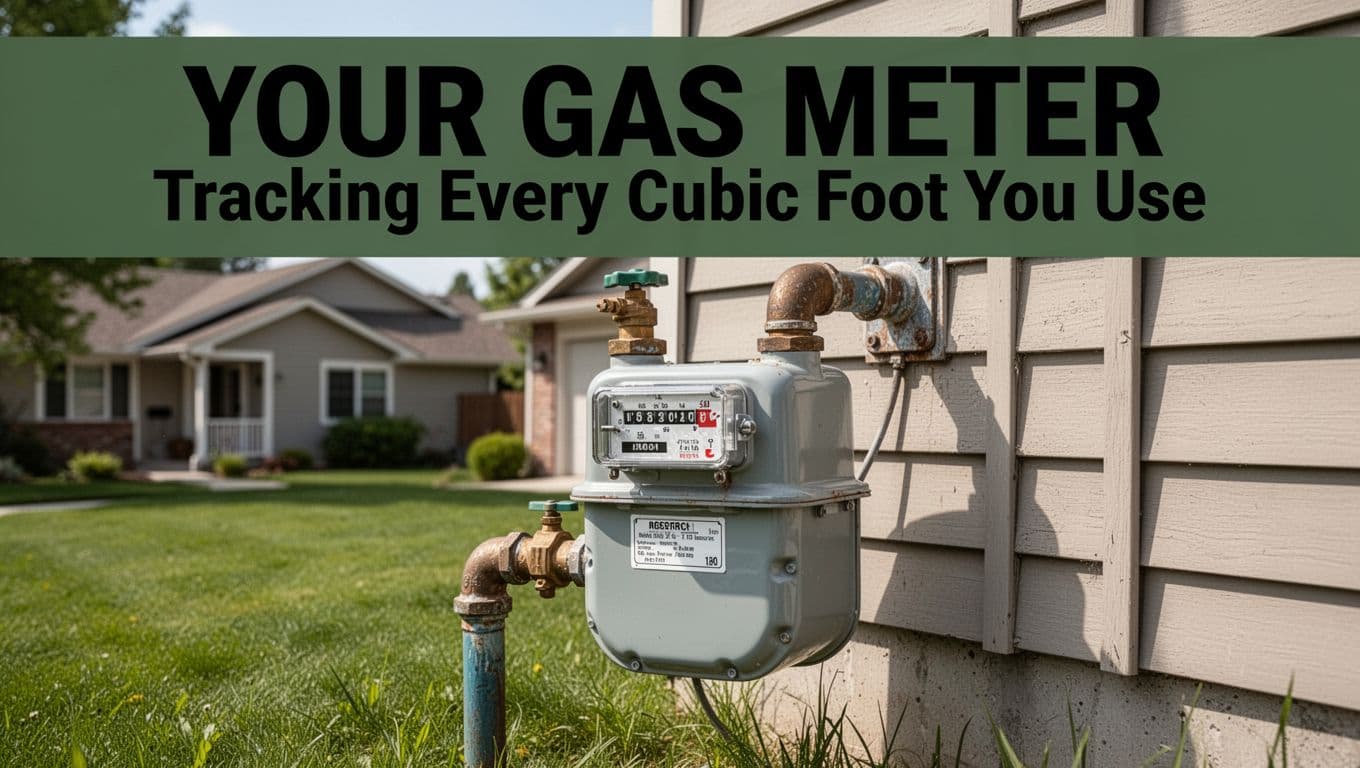
Your Gas Meter: Tracking Every Cubic Foot You Use
Most gas meters sit outside. They often appear near the side of your home or close to the foundation. From the street or service line, gas enters the meter and passes through a measuring section.
The meter measures the volume used, often in cubic feet. Your utility uses that measurement to build your bill. If your usage changes month to month, the meter is the reason.
From Pipes to Burners: Inside the Building
Inside, the gas flows through pipes that connect to your appliances. That can include:
- Stoves and ovens
- Furnaces and boilers
- Water heaters
- Fireplaces (in some homes)
Appliances have valves and controls that regulate flame size. So even though gas arrives through an underground system, your burner gets a controlled flow.
If something goes wrong, safety devices and appliance shutoffs help limit risk. Still, you should treat gas with respect. It is safe when the system works right, and it can be dangerous when it leaks.
Homes Versus Businesses: How Delivery Details Change
Homes and businesses both connect to the same overall pipeline system. However, the delivery details can look different. That is because businesses use more gas, and their needs vary by industry.
High-volume customers, like large manufacturers or power plants, may connect differently. In many cases, they tap closer to transmission systems to handle bigger demand.
Here is a quick comparison of how delivery often differs:
| Feature | Homes | Businesses |
|---|---|---|
| Typical pipe size | Smaller service and indoor lines | Larger service connections when needed |
| Pressure at the building | Lower pressure, tightly matched to appliances | Often more flexible pressure control for varied equipment |
| Meter setup | One or a few meters | Sometimes multiple meters for different areas |
| Usage patterns | Daily heating and cooking cycles | Schedules based on production and operations |
| Common high-volume connections | Rare | More likely for large users and some power needs |
In plain terms, homes want steady, moderate gas flow. Businesses often need higher volumes and more control points.
Why You Can Trust the System: Key Safety Features
Gas delivery is not a “set it and forget it” process. Safety comes from multiple layers that work together.
First, regulators reduce pressure at handoff points. Second, leak detection depends on odorant and monitoring systems. Third, utilities use valves to isolate sections and reduce risk if something changes.
Next, modern pipeline integrity programs include inspections and maintenance. Many operators rely on planning tools, monitoring tech, and regulated procedures to keep systems stable. In addition, much of the pipeline network is underground, which helps protect pipes from weather and many outside impacts.
How safe is “safe”? In 2024, the U.S. had about 411,000 miles of natural gas pipelines managed by operators and covered distribution, transmission, and gathering lines. Utilities also spent about $37 billion yearly on safety upgrades across these systems. Those upgrades support the inspections, monitoring, and tech behind reliable service.
Also, the transmission network includes about 400,000 miles of major pipe routes. That long backbone still gets built and maintained with strict safety rules.
If you smell rotten eggs, treat it like a real warning, not a nuisance.
For practical guidance on what to do around your meter and gas lines, Great Plains Natural Gas Company publishes clear safety tips. It also reinforces the right response steps during emergencies: Safety Tips – Great Plains Natural Gas.
And if you want appliance-focused reminders, National Grid shares general equipment and safe-use guidance too: Gas Equipment and Appliance Safety Tips | National Grid.
Conclusion: From Underground Supply to the Burner in Your Home
So, how is gas delivered to homes and businesses? It starts at wells, gets cleaned in processing plants, then travels through high-pressure transmission pipelines. After that, local distribution systems lower pressure at gate stations and route gas through neighborhood lines to your meter.
From there, your indoor piping delivers the gas to your appliances with controlled flow and built-in safety features. It is a long chain, but it stays coordinated because each step has a clear job.
If you ever smell gas, do not wait. Call your utility right away. That simple move protects you, and it keeps the whole system working the way it should.