Imagine a world where you flip a switch and nothing happens, where your fridge goes warm and your phone never charges. A power grid is the massive network that generates, sends, and delivers electricity from power plants to homes and businesses. It’s like the world’s biggest machine, with over 2 million miles of power lines in the US, plus all the stations, transformers, and controls that keep power moving on time.
You might not think about grids until something goes wrong, like a brownout, a delay in service, or outages that spread faster than you expect. In 2026, that stress is showing up in new ways, including tight transmission capacity, record power demand, and the rush to connect more wind and solar. Even with major upgrades underway, the system has to balance supply and demand every second, across huge distances, with real limits on what equipment can handle.
So, in the next section, you’ll get a clear power grids explained walkthrough of what they do and why they matter, then we’ll look at the key struggles in 2026 and the fixes that could help. When you understand how grids work, you can better spot what’s behind today’s failures and why better planning leads to more dependable power.
Breaking Down the Basics: What Makes Up a Power Grid?
A power grid is not one machine. It’s a whole system that keeps electricity moving, voltage stable, and supply matched to real-time demand. If you picture it as a trip, you need three parts working together, generation, transmission, and distribution.
The Key Players: Generation, Transmission, and Distribution
Start with generation, where electricity gets made. In the US, that happens at many sources, from fuel plants to renewable farms. Right now, there are over 11,000 power plants and about 3,000 utilities, which is a big hint that grids rely on many hands, not one. Some plants burn coal, natural gas, or oil, and others use nuclear heat to make steam and spin turbines. Meanwhile, renewables keep growing fast, especially wind and solar.
In everyday terms, generation is like cooking the power. You can think of each plant as a kitchen that produces electricity, but it doesn’t all cook the same way or at the same speed. Wind farms might surge on a breezy night in the Plains, while solar ramps up during desert afternoons. That variability matters later.
Next comes transmission, the long-haul transport. Transmission uses high-voltage power lines because high voltage lets electricity travel farther with less energy lost as heat. Substations in between use transformers, which act like adjustable “voltage gears.” A transformer can step voltage up for the trip, then step it down when power gets close to where people live.
Here’s the simple idea: transmission is the highway system, built to move huge loads across states. Without it, electricity would get stuck too far from the places that need it.
Finally, distribution delivers power locally. Distribution networks use poles, wires, and sometimes underground cables, often at lower voltages. Utilities route electricity through neighborhoods, then to specific substations and feeder lines that serve homes, schools, and factories. In other words, distribution is like neighborhood streets, turning bulk power into usable service.
In the US, these flows also follow regional grid structures like the Eastern and Western interconnections, plus the separate Texas network. While they’re connected by design, each area runs its power system rules, so operators keep balance inside their region.
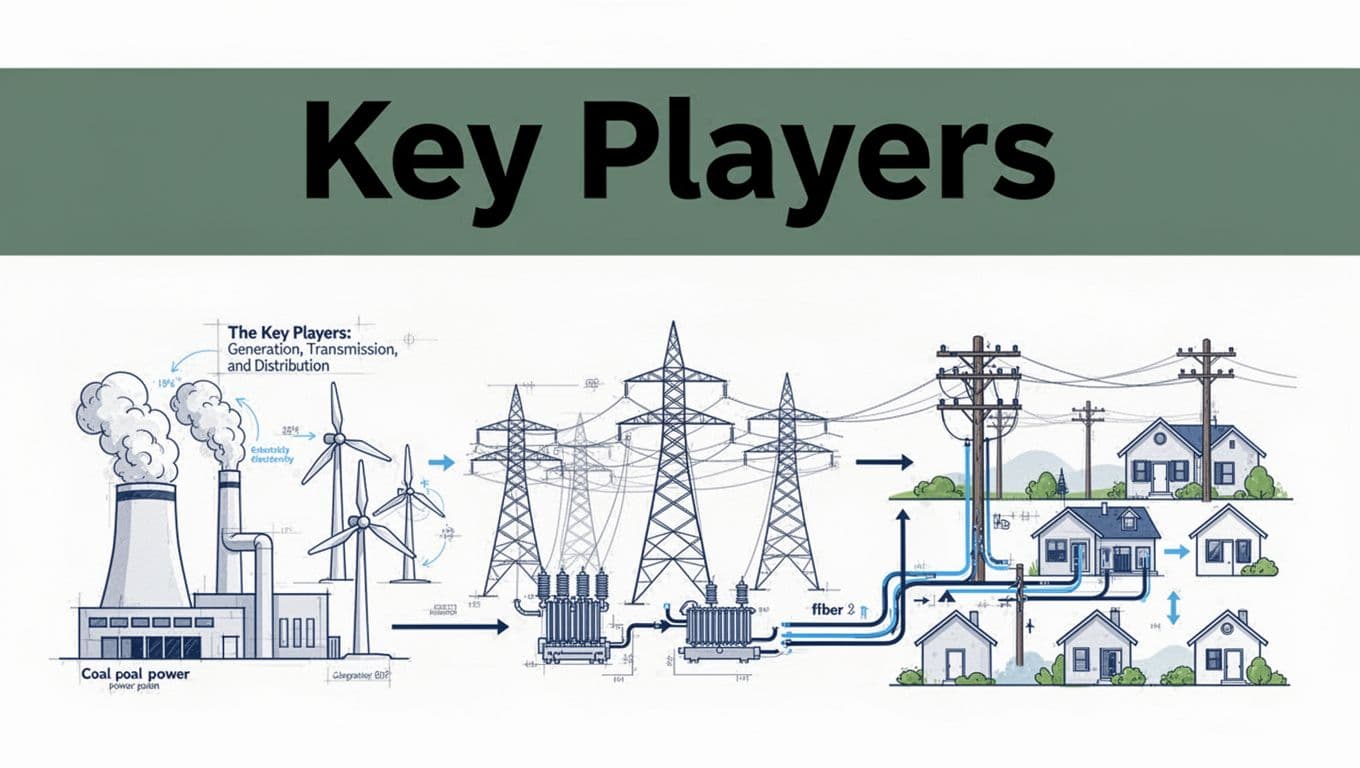
For a clear refresher on how the supply chain is split, see the US Energy Information Administration’s breakdown of how electricity reaches consumers.
From Power Plant to Your Outlet: How It All Flows
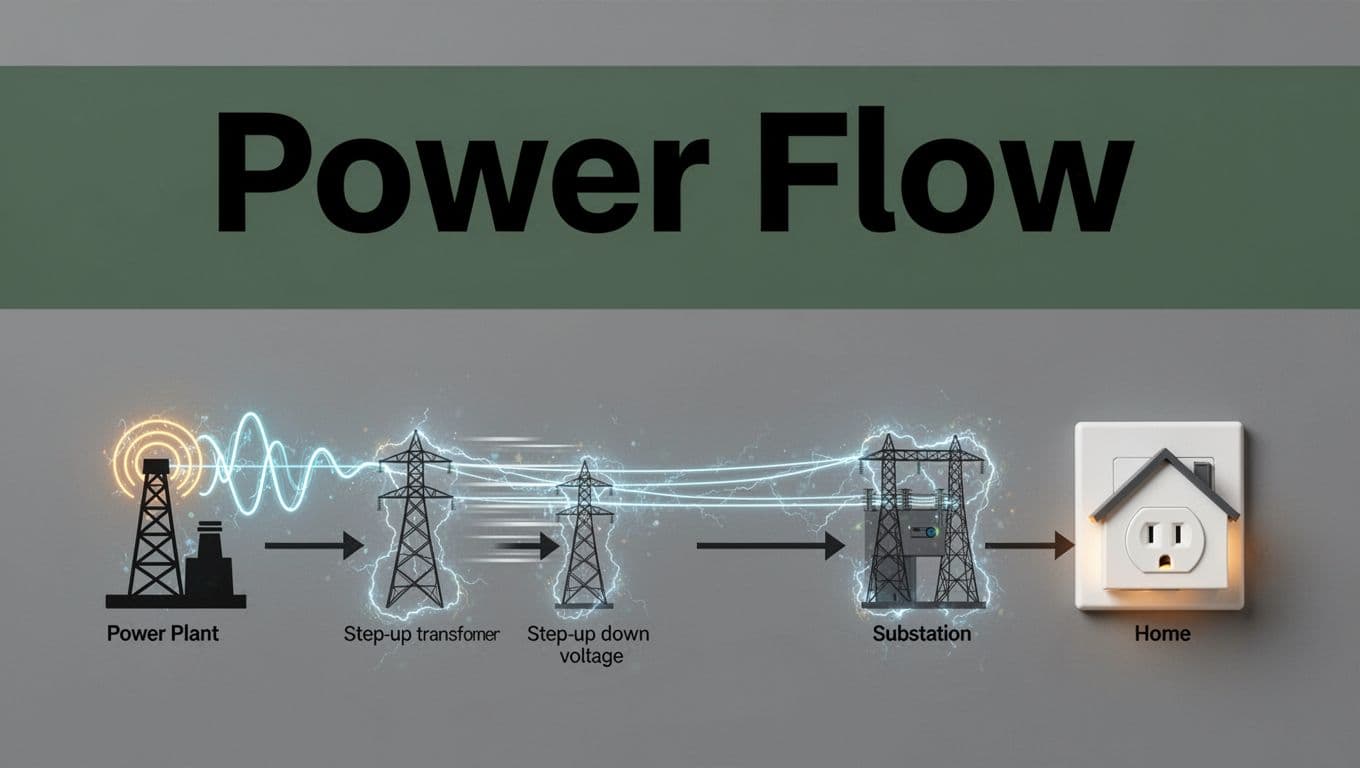
Now picture the trip in order. First, generation creates alternating current (AC) electricity. Most of the time, it comes out at a “working” voltage, then the grid prepares it for travel. After that, the system moves power outward fast, because the grid has to react in seconds.
- Generate AC electricity (plants produce power as AC waves).
- Step voltage up at a substation using transformers.
- Send power on high-voltage transmission lines across long distances.
- Step voltage down at regional substations near load centers.
- Distribute locally through feeders, poles, and underground cables to buildings.
- Deliver usable voltage to your outlets through the final service equipment.
Why does this routing matter? Because electricity doesn’t “wait” politely. Demand changes every moment, like a crowd shifting at once. If supply and demand get out of sync, frequency can drift, protection systems can trip, and outages can start.
Electricity also moves extremely fast through the grid. The key challenge isn’t the travel time. It’s the instant balance. Operators constantly watch the system and make adjustments, so the grid stays stable while generation shifts.
In 2026, syncing renewables adds a new layer. Solar output rises and falls with clouds. Wind output swings with weather. That means operators rely more on fast controls and forecasting, so the system can match changing supply. It’s like adjusting cooking temperature while the meal is in progress.
Here’s one way smart grid updates help. With better sensors, control software, and improved coordination, utilities can:
- See problems sooner (so faults get isolated quickly).
- Move power where it’s needed across constrained corridors.
- Use batteries and other resources to smooth sudden swings.
- Manage curtailment better when transmission limits appear.
If you want the big-picture flow from power plant to service, the EIA guide to electricity delivery also connects the chain from generation to customers. And for background on what happens inside transmission and distribution equipment, the Department of Energy’s primer explains the path and protective roles of the grid components in electric transmission and distribution.
Bottom line: generation makes the power, transmission carries it efficiently, and distribution gets it to you safely. After that, real-time operators keep the whole system balanced, especially as renewables contribute more of the load.
Why Power Grids Are the Backbone of Modern Life
A modern life depends on electricity the way your body depends on oxygen. When the grid works, hospitals keep running, schools stay warm, and your phone and internet keep moving. When it fails, the damage spreads fast, and it hits people you’d never expect, like a rural clinic that needs reliable power for basic care.
Power grids connect far-away power plants to local neighborhoods through transmission lines and distribution networks. They also balance supply and demand in real time, which sounds technical, but it’s really about one simple goal: keep electricity steady and keep it flowing.
If you want a single reason grids matter, start here: they reduce the odds that a problem in one place turns into a disaster across an entire region. That reliability also protects the economy. It protects health. And in 2026, it supports a major energy shift toward more wind, solar, and battery power.
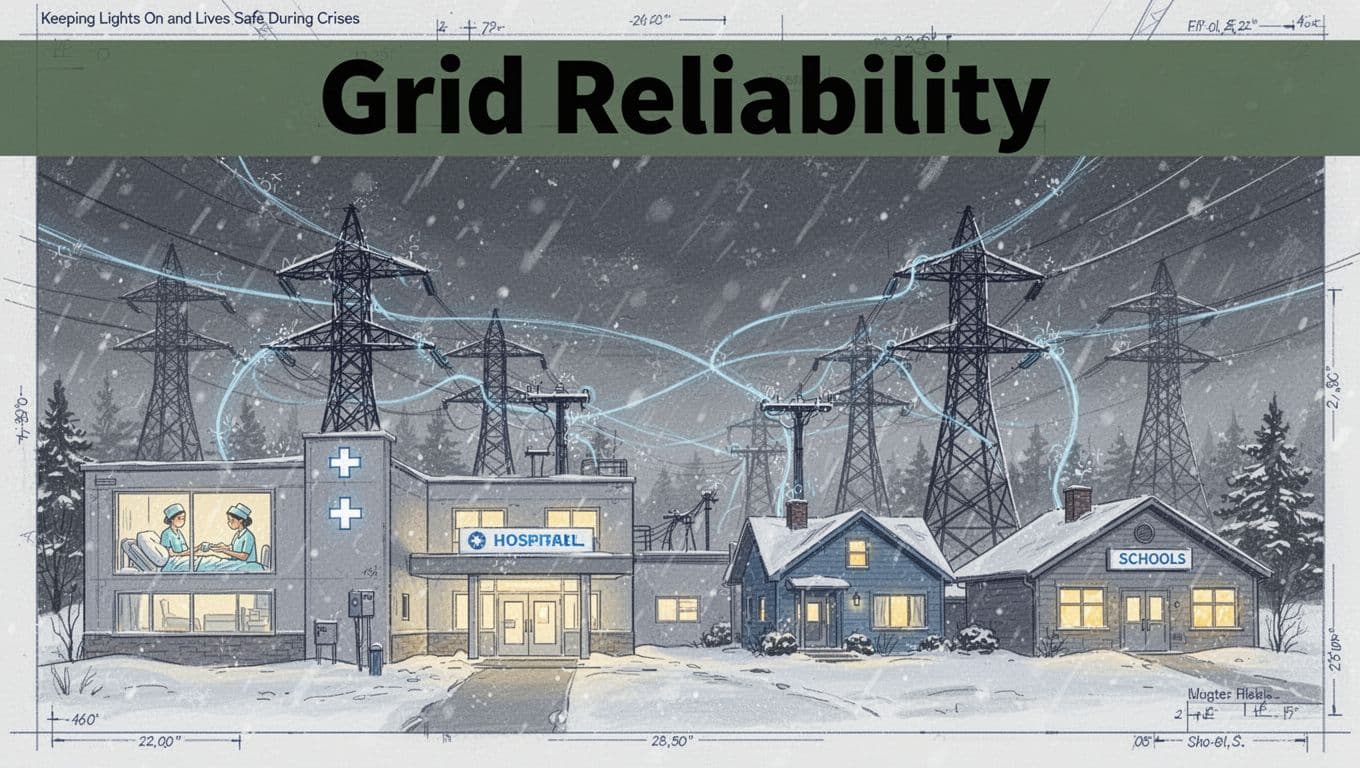
Keeping Lights On and Lives Safe During Crises
Reliability is not a luxury. It’s public safety. When the grid loses power, the results can be immediate, like no lights, no heat, and no refrigeration. Then the secondary effects show up, like people missing medicine doses, pumps failing, and traffic lights going dark. In other words, blackouts don’t just interrupt daily life, they disrupt systems that other systems depend on.
The stakes get obvious in extreme weather. During Winter Storm Uri, millions of Texans lost power. At least 246 people died, and estimates put the total cost at $80 billion to $195 billion. The event also showed how grid stress can cascade. When generation fails, demand rises, and fuel supply breaks down, operators may have to shed load to prevent a full collapse. That’s not just an inconvenience. It can mean no heat, unsafe cooking, and dangerous indoor conditions.
Grids also use interconnections to share power across regions. That sharing matters because no one location is always perfectly prepared. Sometimes one area needs extra capacity while another has a better supply moment. Interconnections can help, especially during storms and heat waves when weather patterns stress different parts of the system. However, interconnections also mean stress can spread if multiple regions face similar conditions or if transmission paths get overloaded.
Here’s what reliability planning tries to do before a crisis hits:
- Keep frequency and voltage stable so equipment and controls don’t trip.
- Isolate faults quickly to stop a local failure from spreading.
- Move power around constraints when certain lines or corridors reach limits.
- Add firm backup resources like storage and targeted generation, so outages don’t snowball.
For a close look at what changed after Uri, see KUOW’s coverage on how Texas blackouts have changed.
Driving Jobs, Savings, and a Cleaner Planet
A stronger grid doesn’t just prevent outages. It also supports jobs and helps keep prices steadier. Think of it like road maintenance for electricity. When roads are neglected, travel gets slower and accidents become more common. When roads get rebuilt and widened, commerce moves better. Power grids follow the same logic.
In the US, grid work pulls people into real roles across construction, engineering, and maintenance. In 2025, the energy sector hit 8.5 million jobs, and grid-related work benefits from upgrades to older transmission and distribution systems. The need grows as utilities connect new power sources, including wind, solar, and batteries. Many organizations also report ongoing hiring pressure for line workers and electricians.
Beyond jobs, there are direct savings. Underused capacity and congestion cost money every time electricity can’t move where it’s needed. Analyses have estimated that better use of existing grid capacity could save consumers more than $100 billion over the next decade. That’s money that shows up as lower pressure on bills, fewer emergency expenses, and fewer costly delays for businesses.
Renewables also fit the story, but not in a simple way. Wind and solar output varies. That means the grid must be ready to balance changing supply while keeping voltage and frequency stable. When grid planning improves, renewables can supply more of the load without driving instability. Storage helps too, because batteries can smooth short swings and cover gaps.
At the same time, cleaner power supports climate goals. As wind and solar add capacity, coal and gas can run less often for electricity generation. In 2025-2026, the US added large amounts of solar, wind, and battery capacity, with renewables and storage making up the majority of new grid capacity. That shift reduces power-plant emissions and also helps meet growing demand from data centers and electrification.
Here’s the benefit chain in plain terms:
- More transmission and distribution capacity reduces bottlenecks.
- Better controls and planning keep power stable as renewables rise.
- Lower congestion and fewer outages protect businesses and households.
- Cleaner generation cuts emissions over time.
If you want a policy and economics view on cost and reliability, Americans for a Clean Energy Grid has summarized results on transmission investment value, including findings like every $1 spent on transmission returning up to $4.70 in benefits.
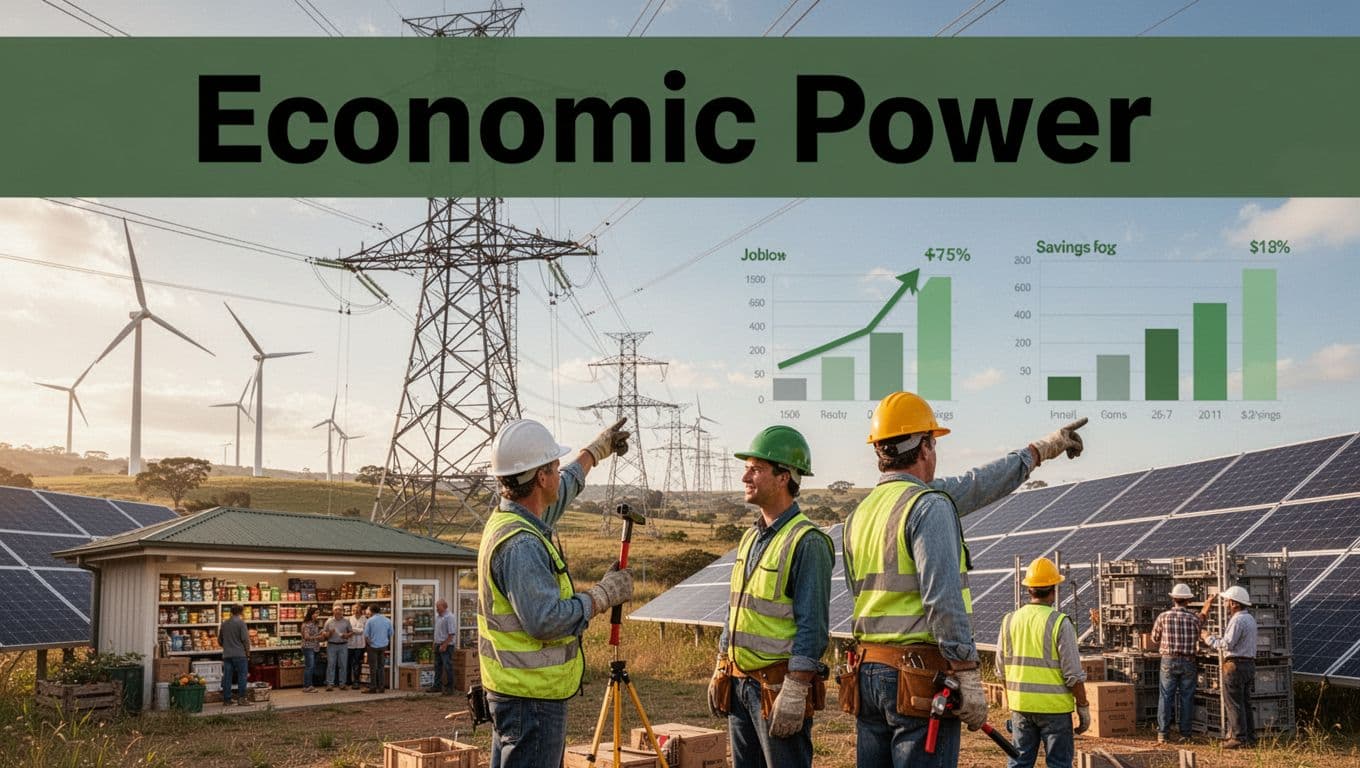
Finally, reliability supports more than cities. Rural areas often need smarter pathways for access, including regional upgrades and, in some cases, smaller connected systems that keep essential services going when the main grid struggles. When you build grid capability, you don’t just add power. You add choices for where people can live, work, study, and get care.
Tough Hurdles Power Grids Face Right Now in 2026
Right now, the grid has a tough job. It must grow faster than new lines can get built, while power quality stays stable every second. Demand keeps rising, but the system has old limits, fresh weather risks, and new cyber threats to manage at the same time.
The result? More pressure on operators, more congestion in key regions, and more moments when utilities need to use every tool they have, including curtailment, contracts, and batteries.
Booming Demand from AI Data Centers and EVs
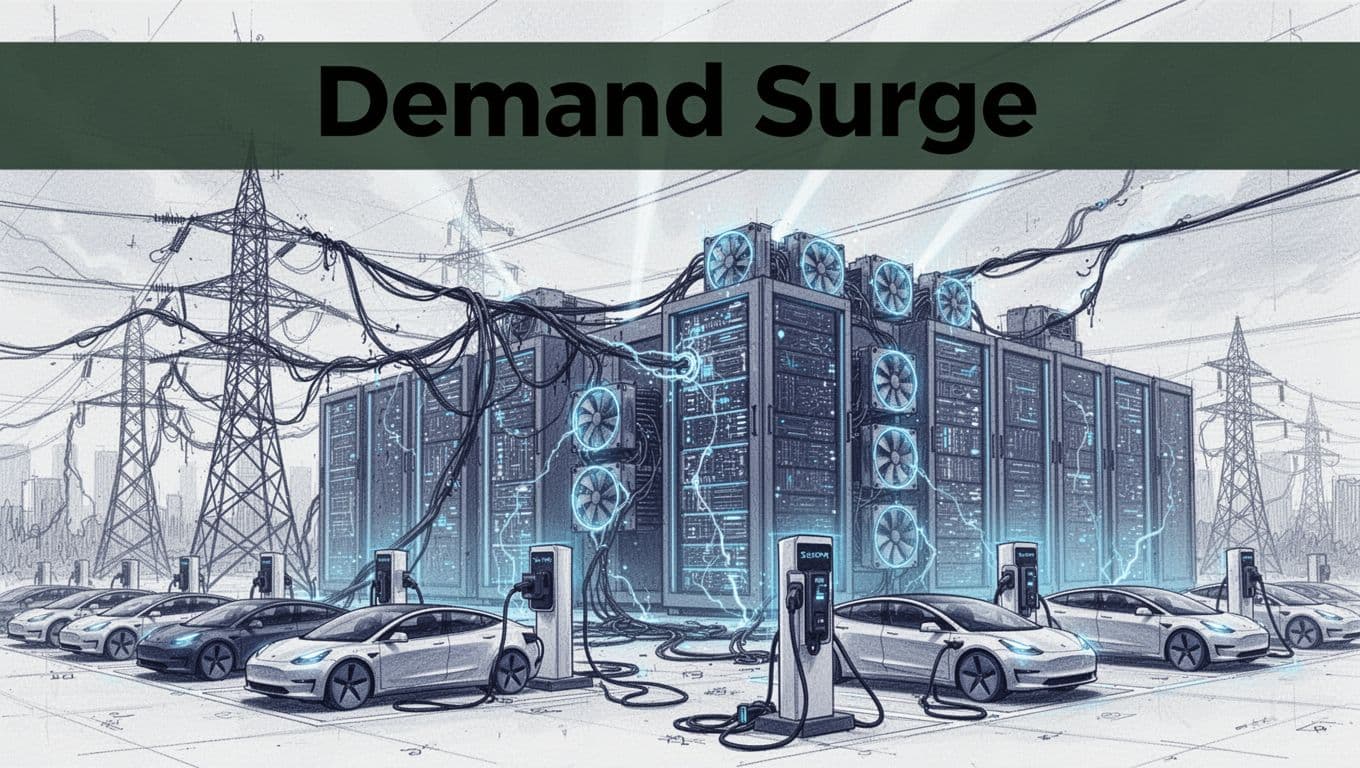
Demand growth in 2026 is not subtle. Electricity use keeps climbing around 3.6% per year, and new loads from AI data centers and electric vehicles (EVs) sit right on top of existing stress. Data centers need large amounts of power that often must stay steady, not just “available sometimes.” Meanwhile, EV adoption adds new charging peaks that change how and when utilities serve customers.
One pressure point is the pace of AI buildouts. By late 2025, utilities and planners were tracking about 241 GW in the data center pipeline. That’s not a future problem. It shows up as near-term needs for connection studies, transformer capacity, and transmission upgrades. Reuters also reported that US power use is expected to beat record highs in 2026 and 2027 as AI demand rises, citing EIA figures (US power use to beat record highs).
Planning timelines are part of the issue. A lot of 10-year grid plans now compress into about 3 years once customers lock in construction schedules. You can feel that speed mismatch in the interconnection queue, too. It’s like pouring water into a widening cup while someone keeps moving the faucet faster.
To make it work, grid operators and big users push flexibility. Companies like Google have talked about using AI-aware demand response and operational flexibility to reduce pressure during peak hours. That kind of “shift where you can, firm it where you must” thinking matters, because the grid can’t simply add new capacity overnight.
Here’s what this demand surge looks like in day-to-day grid terms:
- Heavier evening peaks as EV charging and data center loads stack when solar output drops.
- Higher voltage and thermal stress on transformers and transmission lines.
- More need for fast-response power (supply that can ramp quickly when demand spikes).
- More complicated scheduling when flexible loads compete with each other for limited capacity.
In places like Texas, timing matters even more. Data centers and other load growth can land right as the system reaches its highest evening stress, such as around 9 PM. That timing leaves fewer “safe windows” for maintenance and repairs. If you’ve ever tried to do chores during the busiest household hour, you already get the idea.
Struggles with Renewables, Old Equipment, and Weather
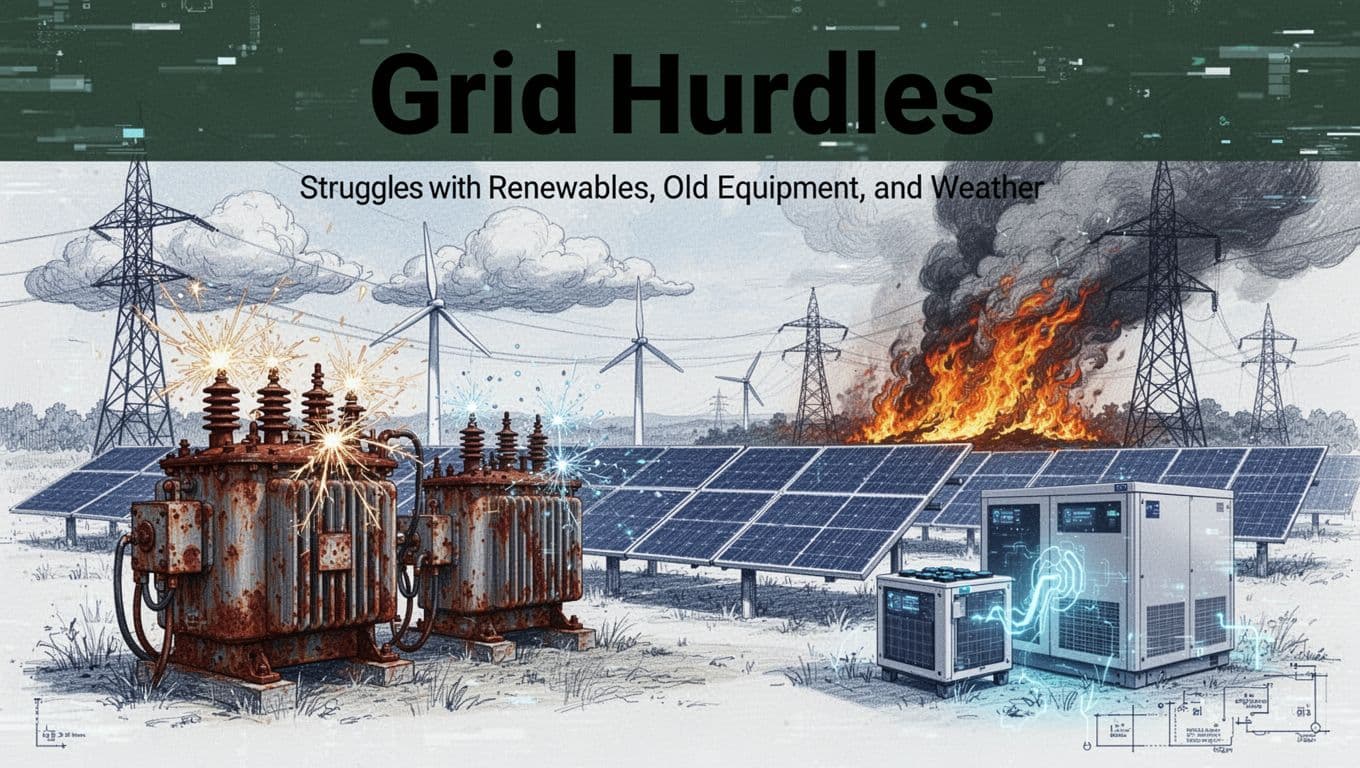
Renewables are growing, but the grid has to deal with how they behave. Solar output drops fast when clouds move or when the sun sets. Wind can surge one hour and fade the next. So the grid needs reserves and quick balancing, and it also needs enough transmission routes to move renewable power to where demand actually is.
When the system can’t move or use the power, curtailment becomes real and expensive. Curtailment is when operators cut back wind or solar output because congestion or reliability limits prevent delivery. California and Texas both see this problem, even while residents hear “we’re adding renewables.” The big mismatch is that generation can arrive before the grid that can carry it does.
California’s congestion story is especially visible. When north-south transfer paths hit limits, extra renewable output can’t get to load centers. Texas has similar bottlenecks when power has to travel long distances to serve fast-growing demand zones. The outcome is frustrating on both ends: clean power is available at the source, but it can’t flow where it’s needed.
At the same time, aging equipment adds another layer of strain. A lot of key transformers and grid assets are wearing out after decades of service. In many areas, around 70% of transmission equipment has surpassed its “normal” life, meaning it runs closer to failure margins when demand spikes. If demand jumps and equipment has less margin, faults become more likely, repairs take longer, and outages become harder to prevent.
Weather keeps making the rules harder. Heat and cold can stress lines and raise risk for equipment trips. Storms can knock down infrastructure. Wildfires can shut lines or force operators to reroute power in moments where every corridor counts. In California, wildfire risk has also influenced the availability of right-of-way and timing for repair work, which slows recovery when outages happen.
Then there’s cyber risk, which keeps climbing as more grid components connect to networks. Reports have warned that grid cyber threats are rising, and ransomware trends have increased the urgency of protecting controls and communications. If attackers target software that coordinates switching, protection, or monitoring, operators lose confidence in the system they must rely on.
So yes, you can get a “perfect storm” of problems:
- Renewables constrained by transmission (so curtailment rises, sometimes alongside negative prices).
- Older equipment under heat and loading stress (so trips and failures become more common).
- Extreme weather (so repairs compete with more emergencies).
- Cyber threats (so reliability tools may need extra safeguards).
If you want an example of how grid congestion blocks renewable output in the US, pv magazine USA has covered how grid constraints act as a bottleneck for projects (Grid congestion as a renewables bottleneck). Curtailment is also a growing topic for developers and operators, since it can affect project economics when output gets cut (US Solar and Wind Curtailment Is Exploding).
The hopeful part is that tools exist, and they’re getting used more. Batteries can smooth renewable swings and provide short bursts of support during peak stress. Better forecasting helps operators plan dispatch earlier. And reliability rules from regulators push systems to harden protection and response plans.
In the meantime, grid constraints may still show up as higher market volatility, expensive balancing costs, and tighter customer service terms. For example, in some regions you can see interruptible service contracts tied to grid stress, like in the Southwest where utilities have used pricing and curtailment-style options to manage demand. When you read that kind of headline, it’s not just “a policy.” It’s the grid telling you it needs more capacity and better flexibility to keep up.
Bright Spots Ahead: Upgrades and Innovations on the Horizon
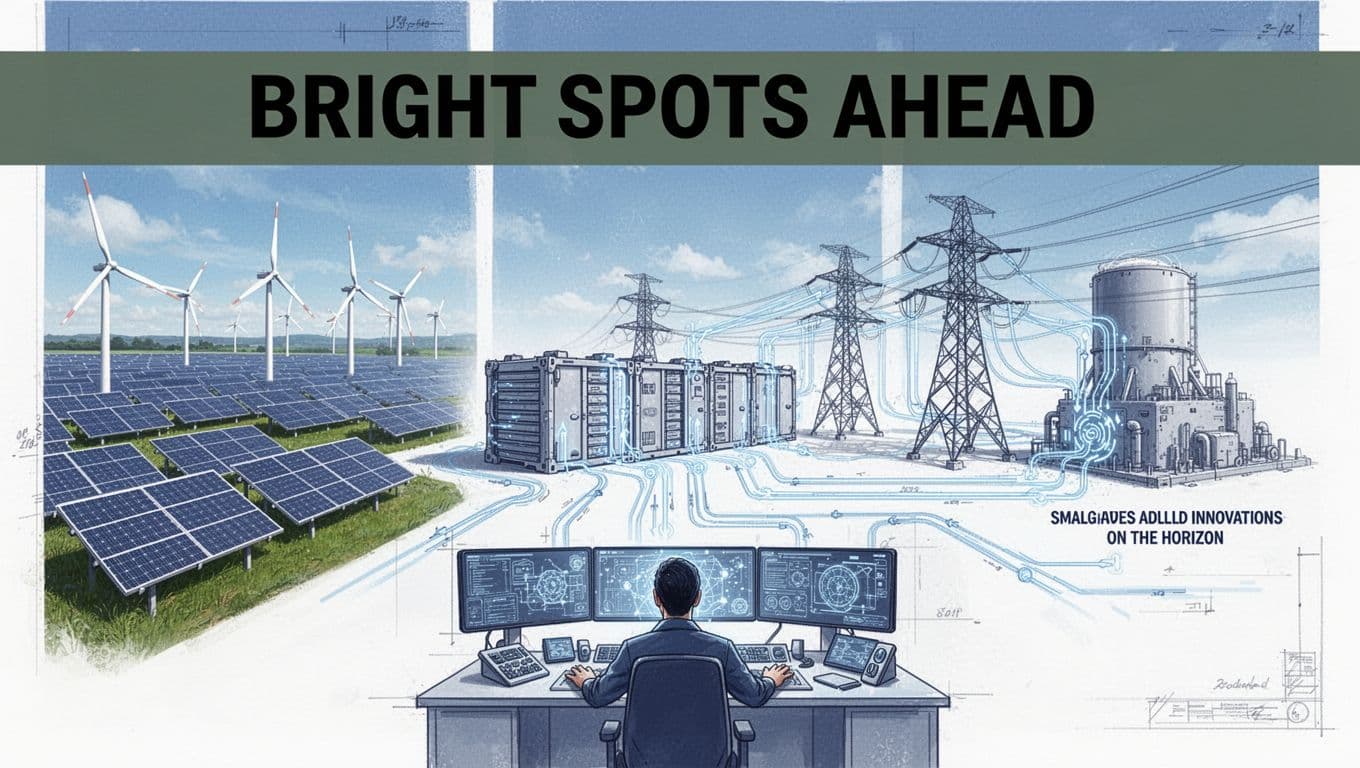
The good news is hard to miss: the US grid is getting new tools, new builds, and better rules. Even with demand rising fast, upgrades can cut bottlenecks and improve reliability. Think of it like adding lanes to a highway and upgrading the traffic lights, while also giving drivers better real-time directions.
Record capacity additions are starting to shift the mix
In 2026, US utilities plan to add a record 86 GW of new capacity. Most of that growth comes from renewables, plus a big wave of battery storage. This shift matters because it changes how the grid balances power, not just how much power exists.
If you want the simplest picture, it looks like this:
- Solar helps during daylight hours.
- Wind can add output when weather cooperates.
- Batteries help cover the gaps between “generation exists” and “generation is needed.”
That battery growth is especially important. Storage doesn’t replace the grid’s main jobs, but it helps smooth short swings and peak stress. It can also support faster recovery after a disruption, which reduces how long customers sit in the dark.
For more detail on the record additions expected in 2026, see EIA forecasts for 86 GW of capacity and American Public Power Association’s summary.
Smart grid upgrades with AI and better sensing are getting real
Modern grids already use sensors and automation, but the next step adds smarter decision-making. With more data from substations and line equipment, operators can spot trouble earlier and respond faster. AI and advanced analytics fit here, mostly as “pattern finders” that help teams see what usually comes next.
In practice, that can mean:
- Faster fault detection so outages stay smaller.
- Better power flow estimates so dispatch matches real limits.
- More precise voltage control so equipment runs within safer ranges.
- Improved forecasting for wind and solar ramps.
Some utilities also plan for two-way power. That includes home solar, community projects, and microgrids that can ride through problems. In other words, the grid gets more like an adaptable nervous system, not just a fixed set of wires.
FERC Order 1920 and federal funding push faster transmission builds
You can have plenty of generation, but the grid still needs paths to deliver it. That’s where planning reform and transmission buildout come in.
A key policy driver is FERC Order 1920, which strengthens long-term transmission planning. The core goal is simple: connect new resources sooner, with clearer coordination and better cost allocation. For updates straight from regulators, read FERC’s news release on Order 1920 updates. You can also track how regulators defend the rule in FERC’s position on Order 1920 appeals.
Meanwhile, federal dollars matter for the “how” of building. When transmission projects move faster, congestion can ease and renewables can flow closer to where people live.
If you want a practical look at the grid policy and market pressure around transmission, see Utility Dive’s 2026 FERC coverage.
Batteries keep winning because reliability needs fast answers
Batteries are turning into the most flexible tool in many regions. They can inject power quickly during peak demand, and they can absorb energy when supply runs high. That ability helps when renewables change output faster than the old grid can comfortably adjust.
Storage also gives operators options. Instead of treating every tight moment as a crisis, they can plan around “dispatchable minutes.” That reduces the pressure to curtail renewables and lowers the chance that one constraint triggers a chain reaction.
Most importantly, storage can support both grid stability and customer needs. It helps the grid ride through brief disturbances, and it can help keep critical loads powered during shortfalls.
Small nuclear and fusion pilots add “firm” power signals
Even as renewables expand, grids still need resources that can produce steady power. That keeps advanced nuclear on the watch list.
Small nuclear and advanced reactors aim to provide more reliable output with smaller build footprints than traditional plants. TerraPower’s progress shows how fast this part of the story is moving, even if full grid impact will take time. For a status update, see Scientific American on TerraPower’s milestone.
Fusion is different. It’s still early, but pilots from companies like Commonwealth Fusion Systems keep the idea alive: clean power that doesn’t depend on wind, sun, or fuel deliveries.
Permitting reforms and “all-of-above” planning reduce delays
Fast builds start with fast approvals. Permitting reforms can shrink timelines for transmission, interconnection, and generation siting. When approvals move faster, the grid has more time to react to load growth from EVs, data centers, and electrification.
At the same time, all-of-above planning helps. It doesn’t pick one winner and ignore the rest. Instead, it builds a mix that matches grid needs, like transmission for long-distance power, storage for timing, and firm resources for steadiness.
The bottom line is clear: the most optimistic path is also the most practical. Faster planning, fewer permitting delays, and smarter upgrades can turn today’s stress into more dependable power for tomorrow.
Conclusion
Power grids are the backbone of modern life because they move electricity from generation to homes and businesses, while keeping frequency and voltage stable. That steady flow is what keeps hospitals running, data center work going, and everyday life normal. At the same time, 2026 is putting real pressure on the system, with demand rising quickly from AI data centers, EVs, and electrification, while transmission buildout and interconnection take time.
The strongest takeaway is simple: reliability depends on planning and upgrades moving in step with growth. That means more transmission capacity, more storage, and smarter ways to manage power when renewables output shifts. If the grid falls behind, costs rise and outages become more likely.
Want to help where you live? Follow your local utility updates, support grid upgrade projects in your area, and shift energy use to off-peak hours when you can. What part of grid reliability do you care about most, fewer outages, lower bills, or faster clean energy connections?