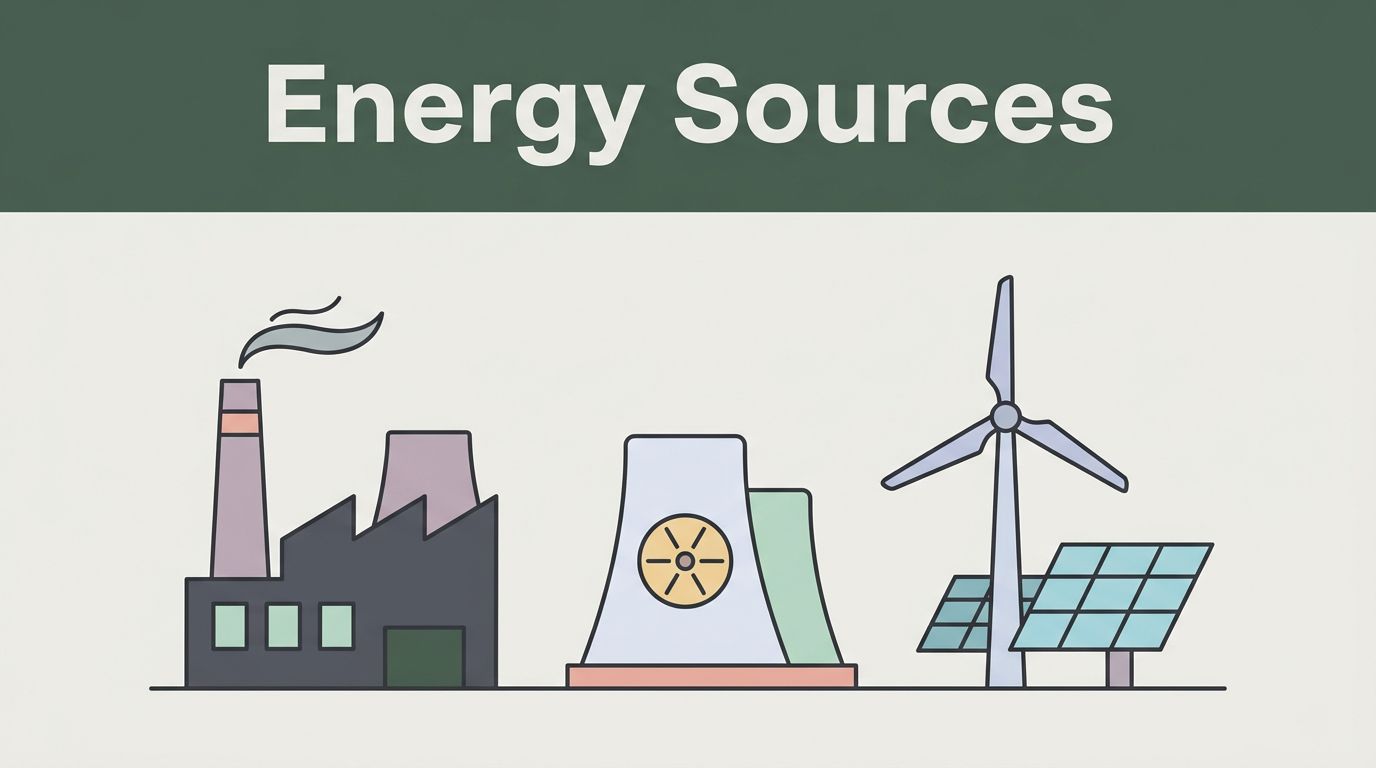
Ever wake up and realize the lights are out, or your phone won’t charge? That moment makes energy feel personal. Energy sources are the fuels and forces we use to make electricity, heat buildings, and power transport.
Most energy comes from two big buckets. Non-renewable sources are limited, meaning they won’t last forever. Renewable sources keep coming back because nature replenishes them.
In 2026, renewables are growing fast. Some forecasts put renewables at about 36% of global power, and they’re on track to pass coal in many places. Globally, renewable capacity has reached around 3,610 GW.
Now let’s break down the main types of energy sources, what they do in plain terms, and what tradeoffs come with each one.
Non-Renewable Energy Sources That Keep Our World Running Today
Non-renewable energy sources come from materials formed long ago. Coal, oil, and natural gas took shape over millions of years from old plants and animals. Nuclear energy uses a specific kind of material found in the earth, like uranium.
These sources have two major perks. First, they can produce energy on demand. Second, they already power a huge share of today’s grid and transport. That’s why they still show up everywhere, even as the world adds more renewables.
The downside is also simple. Finite fuel means long-term limits. There’s also the pollution piece. Burning fossil fuels releases carbon dioxide (CO2). Other pollutants can affect air quality too. Nuclear power doesn’t burn fuel for energy, but it creates waste that needs careful handling.
If you want a helpful baseline, the U.S. Energy Information Administration explains the main sources of energy and how they show up in daily life through electricity, heat, and fuels: U.S. EIA sources of energy.
Finally, here’s the reality check for 2026. Fossil fuels and nuclear power still matter. Still, renewables are rising quickly, and they take a bigger share of new power each year.
Coal: The Old-School Fuel Dug from the Ground
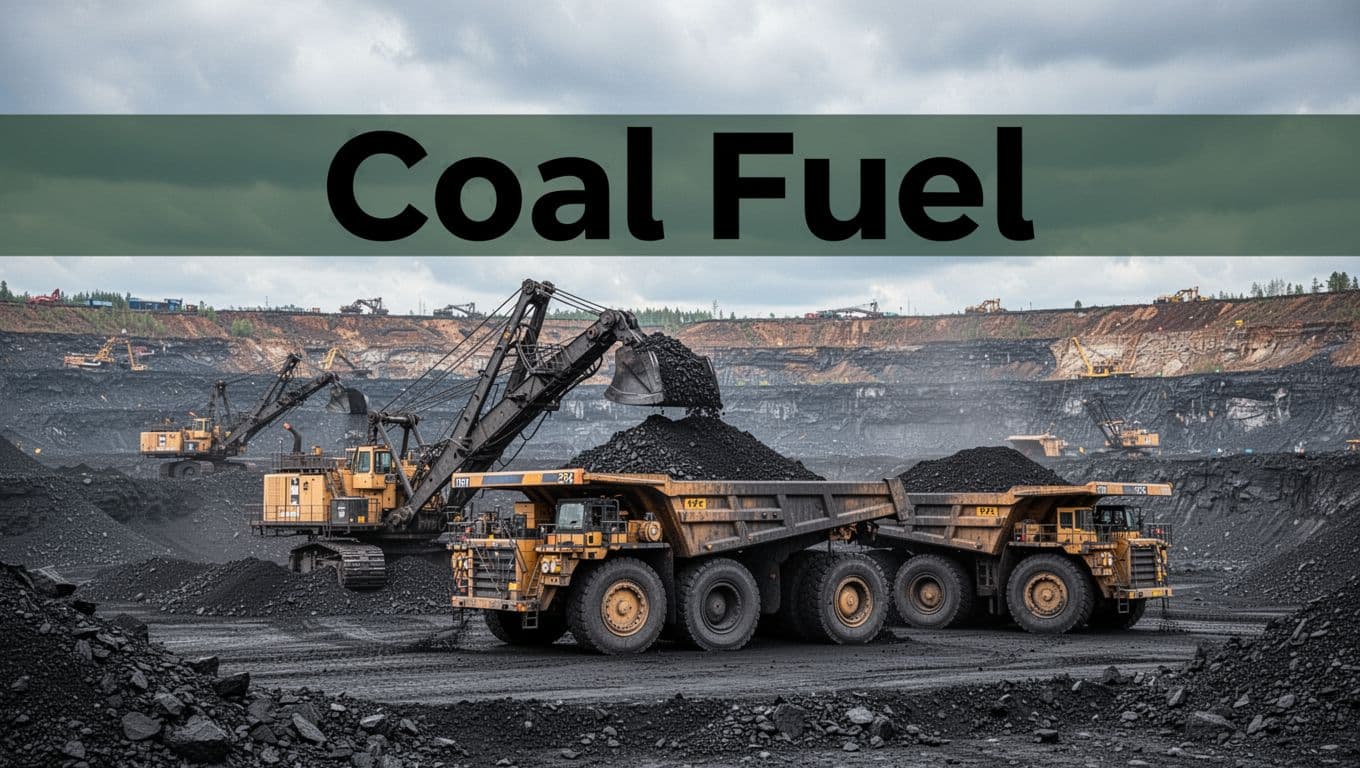
Coal is a black rock that stores energy from ancient plant matter. Mines dig it out, then power plants crush it and burn it. The heat boils water into steam, and steam spins turbines to generate electricity.
Coal’s biggest advantage is its track record. For decades, it’s been widely available and often cheap. For power stations, it’s also predictable, because plants can run steadily.
The downside is harder to ignore. Coal is among the most polluting fossil fuels. Burning it releases large amounts of CO2, plus other air pollutants.
A simple way to picture coal is this: it’s like a battery you can open only once. You can burn it to make power, but you can’t get that stored energy back later. Over time, the fuel supply and emissions both become problems.
Coal also shows how one source can still be powerful while declining. In the U.S., coal was about 16% of power in 2025, and its global share is projected to fall toward 32% by 2026. Even if a coal plant can power about a million homes, the air impacts can be severe for nearby communities.
Oil: The Liquid Fuel Powering Cars and Planes
Oil is a liquid fuel made of many chemical compounds. Drilling teams pull it from the ground, then refineries turn it into fuels like gasoline and diesel. Those fuels power engines that move vehicles and also provide heat for some uses.
Oil matters less for everyday electricity today than it used to. Most oil energy goes to transportation first, like cars, trucks, ships, and planes. Still, it shows up in parts of the energy system, especially where other options take time to build.
Oil’s main strengths are convenience and energy density. It stores well and ships easily. Because of that, it’s been the backbone of transport for a long time.
The tradeoffs are serious. Spills can harm water and wildlife. Oil markets also link to geopolitics, because countries compete for control and supply. And yes, oil runs out over time, which is why the world keeps searching for alternatives.
Think of oil like a fast-burning candle. You get a lot of motion out of it. But once it’s gone, you need new fuel deliveries to keep the same pace.
Natural Gas: A Cleaner Burn from Underground
Natural gas is mostly methane. Wells extract it, then operators send it through pipelines. Power plants burn it to make steam, which drives turbines.
Compared with coal, natural gas is often seen as “cleaner” for two reasons. First, it can produce electricity with lower CO2 emissions than coal. Second, it’s useful for balancing the grid because many gas plants can ramp up faster.
However, natural gas still isn’t renewable. It’s still a fossil fuel, so it comes with long-term supply limits. Also, methane leaks can be a big concern, especially if gas escapes during drilling, processing, or transport.
In the U.S., natural gas contributed about 40% of electricity in 2025 and stayed relatively stable. With renewables growing, some forecasts also estimate natural gas plus renewables together reach 66% of total U.S. power as the mix shifts.
So natural gas often plays a “bridge” role. It can fill gaps while cleaner sources grow. Yet it can’t replace fossil fuels by itself.
Nuclear Power: Splitting Atoms for Huge Energy
Nuclear power works differently. Instead of burning fuel, reactors split atoms, often uranium. That splitting releases heat. Steam then powers turbines, just like other thermal plants.
The key benefit is how much energy you can get from a small amount of fuel. Nuclear plants can also run at high output for long periods. In many grid plans, they’re valued for that steadiness.
Nuclear also has a major climate advantage. During normal operation, it creates no CO2 from burning fuel.
The downsides are real too. Nuclear waste needs long-term storage. Costs to build and regulate new plants can be high. Safety events are rare, but they carry big consequences when they happen.
A 2026 look at capacity and power mix shows nuclear still plays a major role. Global nuclear capacity is around 395 GW, and forecasts put it as a growing part of U.S. zero-emission power, along with renewables.
Renewable Energy Sources Drawing from Nature’s Bounty
Renewable energy comes from sources that refill naturally. Sunlight keeps arriving. Wind keeps moving air. Rivers keep flowing. Earth keeps producing heat. Even biomass is often treated as renewable when waste and fast-growing crops get managed carefully.
Renewables bring big upsides. Operating costs can be low after installation. They also tend to produce far less planet-warming pollution than fossil fuels.
Yet renewables don’t work the same way as coal or gas. Solar output depends on sunlight. Wind output depends on wind. That means the grid needs planning, backup, and storage.
A useful way to understand the types is EIA’s explanation of renewable energy’s sources and how each gets used: EIA renewable energy types and usage.
In 2026, the growth is not subtle. Globally, renewable capacity sits around 3,610 GW. Hydropower leads at about 1,289 GW, followed by wind around 1,081 GW and solar around 754 GW.
In the U.S., renewables made up about 26% of electricity in 2025, and they accounted for about 61% of new capacity. That shift matters because it changes what new power plants get built next.
Solar Power: Turning Sunlight into Free Electricity
Solar power uses photovoltaic (PV) panels to turn sunlight into electricity. Inside each panel, light knocks loose electrons. That movement creates electric current.
Solar’s strengths are speed of growth and falling costs in many markets. It also fits well on rooftops and small sites. In the U.S., solar additions have been booming, with about 27 GW new in 2025, and even more in 2026 plan numbers.
Solar’s main limitation is timing. At night, you can’t generate power from sunlight. Clouds also reduce output. So most clean energy plans pair solar with batteries or grid resources that can back it up.
Solar also has a “quiet” advantage. It can be installed near where people live and work. That can cut some transmission needs, though it depends on the local grid.
In 2026, solar continues to grow because it pairs well with storage. That combo helps smooth out daily swings.
Wind Energy: Giant Turbines Catching the Breeze
Wind energy uses turbines with big blades. When wind hits those blades, they spin. A generator converts that motion into electricity.
Wind can be on land (onshore) or offshore. Offshore wind often has stronger, more consistent winds, but it’s more expensive to build. Onshore projects can scale faster in many areas.
Wind’s pros include strong output where wind resources are good. In the U.S., recent plans point to major onshore growth in 2025, and offshore growth is rising too.
The cons are local. Birds can be affected, especially without careful site selection. Nearby communities sometimes report noise concerns. In addition, wind farms need space and good transmission planning.
Wind and solar also work well together. Solar peaks during the day. Wind can be stronger at other times. Put simply, their patterns can complement each other.
Hydropower: Flowing Water Spinning Turbines
Hydropower uses moving water to generate electricity. Dams channel a river’s flow through turbines. As water passes, it turns the turbine blades.
Hydropower remains the largest renewable source by installed capacity. Globally, it sits around 1,289 GW. It’s also known for reliability compared with wind and solar, since water flow can be managed.
Some systems also use pumped storage. They pump water uphill when electricity is cheap, then release it later to generate power. That helps with grid balancing. Pumped storage can reach up to about 16.5 GW in some estimates.
The main downside is environmental impact. Dams can disrupt fish routes and change river ecosystems. That’s why many new hydropower plans now weigh upgrades and small projects more carefully.
Hydropower often plays a “backbone” role in renewable-heavy grids. It can provide steadier power when weather shifts.
Geothermal Energy: Tapping Earth’s Inner Heat
Geothermal energy taps heat inside the Earth. Wells drill into hot rock or hot water zones. That heat produces steam or hot fluid, which drives turbines.
The big advantage is consistency. Unlike solar and wind, geothermal can run 24/7 if the resource is available. It also helps stabilize power supply on days when other sources drop.
The limitation is location. Not every region has geothermal resources close enough to make projects practical. So geothermal capacity tends to concentrate in specific areas.
Global geothermal capacity is around 13 GW. It’s smaller than solar or wind, but it’s still valuable because it’s steady and long-lasting.
Biomass Energy: Burning Plants and Waste
Biomass uses organic material like wood chips, crop waste, or certain types of trash for energy. It can generate heat and electricity, and it can also support biofuels.
Biogas is another path. Landfills and manure systems can produce methane-rich gas that gets captured and used.
The biggest pro is using waste. If managed well, biomass can reduce what would otherwise end up in landfills. Some forecasts also expect biomass growth to reach about 22% to 23% by 2030 in certain scenarios.
The main con is food and land competition. If biomass crops take over farmland, they can raise food prices or affect ecosystems. That’s why rules and monitoring matter so much.
Biomass fits best when it uses waste streams that already exist. Then it becomes an efficiency win, not a land grab.
The Big Shift in 2026: Trends Shaping Our Energy Future
Here’s what makes 2026 feel different. Renewables aren’t only growing. They’re also taking most of the new capacity additions in many regions.
At the same time, fossil power is losing momentum for new buildouts in some areas. Coal is especially under pressure. Coal plants are aging, and new renewables can often compete on cost in strong solar and wind regions.
On the renewable side, investments and installations are moving fast. The U.S. outlook for 2026 includes record additions. According to recent EIA-linked reporting, the U.S. is set to add big amounts of solar, wind, and especially battery storage.
For the U.S. 2026 new capacity plans, the mix looks like this:
| Source | New Capacity in 2026 (GW) | Notes |
|---|---|---|
| Solar | 43.4 | Up from 27.2 GW in 2025 (plan) |
| Battery storage | 24.3 | Tops 2025 record, total storage exceeds 40 GW |
| Wind | 12.0 | Part of a larger regional buildout |
| Natural gas | 6.3 | Smaller add, often linked to specific grids |
This is one reason renewables can grow quickly: the new additions often come with storage, which helps the grid handle variability.
Meanwhile, the world’s electricity demand keeps rising. The IEA forecasts that electricity demand grows through 2030 due to more industry use, electric vehicles, and more air conditioning and data centers. See the IEA’s summary here: IEA Electricity 2026 executive summary.
Demand growth matters because it changes the stakes. When the grid needs more electricity, the question becomes, “What gets built?” In 2026, in many places, the answer is increasingly solar, wind, and storage.
Some reporting also points to EIA data that suggests solar, wind, and batteries will add enough capacity to swamp new fossil additions in 2026. For a quick read on that, check: EIA new solar, wind + storage capacity will swamp fossil fuels in 2026.
This shift affects more than climate goals. It affects jobs, too. Construction and installation work grows around renewables. At the same time, grid updates become more important. Power lines, interconnections, and fast planning can decide whether clean power shows up on time.
Conclusion
Energy sources fall into two simple categories: non-renewables that power us now but decline over time, and renewables that keep coming as nature refills the input.
Coal, oil, natural gas, and nuclear each make energy in their own way. Yet they all face limits, emissions, or costs. Meanwhile, solar, wind, hydropower, geothermal, and biomass can scale with lower ongoing pollution, even if weather and site limits require careful planning.
That’s why 2026 feels like a turning point. Renewables are taking a bigger share of new power, and they’re moving toward major leadership roles.
If you want to act on this shift, start small and local. Look into home solar options, ask about community solar, and cut energy waste where you live. What would you do if your next bill dropped because your home used cleaner power?