Have you ever opened your bill and felt like it was written in another language? You’re not alone. A utility bill is a monthly statement for essential home services like electricity, water, and gas. It shows your usage, the cost to deliver that service, and the charges you owe for the billing period.
In other words, your bill is your receipt. When you understand what each line item means, you can spot mistakes faster and avoid surprise costs. You can also compare months without guessing.
In this guide, you’ll learn what is a utility bill and what does it include, then how the parts work behind the scenes. You’ll get a clear breakdown of the most common bill sections, plus what usually shows up for electricity, natural gas, water, sewer, and trash. You’ll also see the most common fees and surcharges, and you’ll get real 2026-style benchmarks like the average electricity bill around $140 per month. Finally, you’ll understand the trends that can make bills rise or fall.
The Core of Every Utility Bill: Key Parts You Need to Know
Most utility bills share the same backbone. Even when the layout looks different, the goal is the same, tell you how much you used and what you owe.
Here are the parts you’ll usually see on a typical US household bill:
- Account and customer info: your name, service address, and account number.
- Billing period: the dates covered by the charges.
- Meter details: meter ID and sometimes the meter read dates.
- Previous and current readings: numbers used to calculate your usage.
- Usage amount: the difference between readings (kWh, therms, gallons, etc.).
- Due date and amount due: the total you must pay.
- Rate info: sometimes shown as cents per kWh or a delivery rate.
- Payment options: online pay, autopay, mail, or phone payments.
- Service fees: fixed charges that apply even if you use less energy.
One key idea: your bill often includes both usage charges and fixed fees. That’s why a low-usage month can still show a bill that doesn’t drop to zero.
If you want a broader look at common charges, this guide on common utility bill charges and line items can help you connect what you see on your statement to real categories.
Usage Details and Meter Readings
The heart of your bill is the meter reading math. Utilities track how your home uses energy and water, then convert it into numbers that money can follow.
For most homes, your meter has two readings:
- Previous reading (from the last billing cycle)
- Current reading (from this cycle)
Your usage is the difference between them. If your electricity meter goes from 4,120 to 5,010 kWh, your usage is 890 kWh for that period.
For electricity, usage is commonly measured in kWh. Many US households land under 900 kWh per month in spring and mild seasons, though it varies a lot by region.
For natural gas, utilities often measure in therms or cubic feet, depending on local practices. Water meters typically show gallons used. Sewer is often calculated from water usage, so the billing logic stays tied together.
In addition, some bills include note-style details like:
- whether reads are actual or estimated
- whether your meter was read on a specific day
- why your usage might be higher or lower than last month
That matters because estimated readings can create a “catch-up” month later. If you compare month to month, keep that in mind.
A quick example makes it click. Imagine your water bill shows you used 5,000 gallons this period. Even if you used the same amount as last month, the total can change due to rate updates or added surcharges.
Supply and Delivery Charges
Once usage is calculated, your bill usually splits the cost into two big buckets: supply and delivery.
- Supply charge: the cost of the energy or gas itself.
- Delivery charge: the cost to move that energy to your home through local systems.
Electricity is the clearest example. The “supply” part can reflect wholesale energy prices and policy charges. The “delivery” part pays for poles, wires, and local infrastructure.
Some plans also show time-based rates, like higher costs during peak hours. If you’re on time-of-use electricity, your bill may include peak and off-peak usage amounts.
Even if you use very little, many utilities still add a flat service fee. That’s the fee for keeping your account active and maintaining baseline system access. So you can’t treat the bill like a fuel tank where the cost always reaches zero.
If you want extra help reading how electricity charges show up, the explainer from understand your utility bill is a useful reference for the types of components that appear.
Breaking Down Bills by Utility Type
Now the question becomes simpler: what does each utility usually include?
Most households don’t get one bill for everything. Still, you’ll notice patterns. Electricity often breaks into multiple lines. Water and sewer can bundle together. Trash is often the easiest, because it’s usually a flat pickup fee.
Below are the typical inclusions for each common utility.
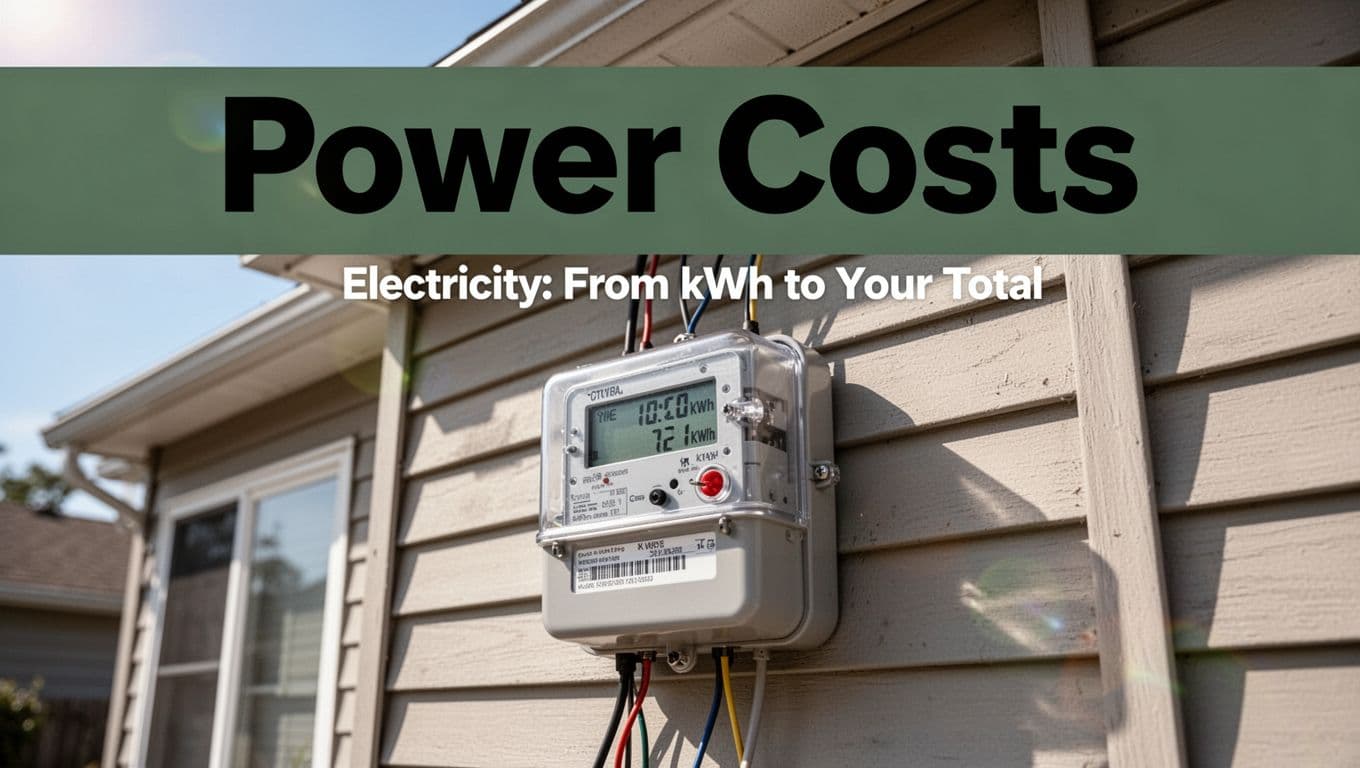
Electricity: From kWh to Your Total
An electricity bill often looks like a short story made of line items. But most of them point back to one theme: how many kWh you used, plus the system costs and required fees.
Common electricity charges include:
- kWh usage (your main number)
- a supply charge per kWh
- a delivery charge per kWh
- renewable or clean energy surcharges (if required in your area)
- demand charges in some plans (more common for businesses than homes)
- a flat service fee each month
For 2026-style benchmarks, the national average electricity bill is about $148.80 per month, and the average rate is roughly 17.24 cents per kWh. Keep in mind, that rate varies by state and utility.
A typical “under 900 kWh” home might see bills dip in milder months. That’s why spring can feel like a relief, then summer brings it back with air conditioning.
Also, if you’re on a plan with peak and off-peak pricing, you’ll want to check if the bill totals show different rate categories. Those categories can make a month-to-month comparison misleading.
If you compare your bill only by the total, you may miss the real driver.
Natural Gas Bills Explained
Natural gas bills usually follow the same logic as electricity, but the measurements differ. Instead of kWh, you’ll see therms or cubic feet to show usage.
Most natural gas bills include:
- usage amount (therms or cubic feet)
- supply charge for gas itself
- delivery charge to bring the gas to your area
- taxes and local fees
Seasonality matters more for gas than for many other utilities. When heating season starts, your usage climbs fast. As a result, even “normal” winter months can be much higher than summer.
That’s also why spring and fall bills often drop. If your bill doesn’t drop as much as expected, the reason could be a long heating run, a drafty home, or a thermostat that runs more than you think.
Water, Sewer, and Trash Services
Water and sewer often share a link. In many cities, sewer charges rise with your water use. That means your water habits affect two lines, not one.
A typical combined pattern looks like this:
- Water: measured by gallons used, plus a base charge
- Sewer: often based on water usage (sometimes with a separate rate)
- Trash: usually a flat monthly fee for pickup
So even if trash is handled as a set service, water can swing based on how often you run sprinklers or how many loads of laundry you do.
For 2026-style planning, many households see water and sewer together around $129 per month on average. Of course, local rates vary widely. Some cities charge more due to treatment costs and upgrades.
Trash charges can also vary by service level. Some areas bundle recycling. Others charge for extra bins or different pickup schedules. Still, most bills keep trash as a predictable fixed line.
Fees, Taxes, and Surcharges That Add Up
Utility bills often include extras that don’t feel tied to your usage. Yet they can add up quickly.
Common add-ons include:
- fixed service fees (the base charge)
- local taxes (varies by city and state)
- infrastructure or maintenance surcharges
- renewable energy or environmental fees
- regulatory fees tied to required programs
These charges can show up even in low-usage months. That’s why your bill might not “fall” as much as you expect after a vacation.
Here’s a practical way to spot what’s going on. When you get your bill, scan for anything that sounds like it’s required by the state, city, or utility program. Then compare those line items to last month.
If you see a new fee or a big jump, look for one of these explanations:
- your utility updated rates
- your billing cycle changed
- you had an estimated meter read corrected later
- you got a higher usage number even if the total hides it
If the total rises but your usage stays similar, fees and surcharges are usually the culprit.
If your usage changed, check whether the meter readings were actual or estimated.
Also, keep your questions simple when you call. Ask what each fee covers and whether it’s required for all customers. Clear answers help you decide if it’s normal or if something needs fixing.
Average Costs in 2026 and Factors That Influence Them
It helps to know what “typical” looks like. Then you can judge your bill without panic.
Based on recent national benchmarks, here are common ranges for US household bills:
| Utility (Typical Household) | Approx. National Average |
|---|---|
| Electricity | $140 to $150/month |
| Natural Gas | $70 to $100/month (lower in spring) |
| Water | $40 to $70/month |
| Sewer | $30 to $60/month |
| Trash | $20 to $40/month |
Total monthly utility costs for many homes often land in the few-hundreds range once you combine everything. That lines up with common budgeting guidance from sources like how to estimate utility costs.
Now, here’s what drives your real numbers:
- Home size and insulation (bigger homes usually use more heat or cooling)
- Your thermostat habits (small changes can shift the bill)
- Appliance choices (older appliances often cost more)
- Weather (gas and electricity both react)
- Local rates (cents per kWh and delivery rates vary)
- Time-of-use plans (peak hours can push costs up)
One trend you may notice in 2026 is more attention on rate structures. Some utilities encourage customers to shift usage to off-peak hours. Others push optional payment plans to reduce “one big bill” stress.
Also, digital bills and online accounts are common now. That can help you spot changes faster, especially if you check your meter readings and track usage month-to-month.
Most importantly, averages are a benchmark, not a promise. Your home’s location and habits matter more than any national number.
Conclusion
A utility bill is your monthly receipt for essential services. It ties usage to charges, then adds fixed fees, taxes, and required surcharges.
When you know where to look, you stop guessing. Check the meter readings, compare usage to last month, and then scan for new or rising fees.
For your next bill, start with one simple action: verify your meter numbers and track how your usage moves. Then compare your electricity and water lines, because those often tell you why the total changed.
Small changes can lower costs too, tighter thermostat control, smarter water use, and efficient appliance habits. When you understand what your bill includes, you can manage your budget with confidence.