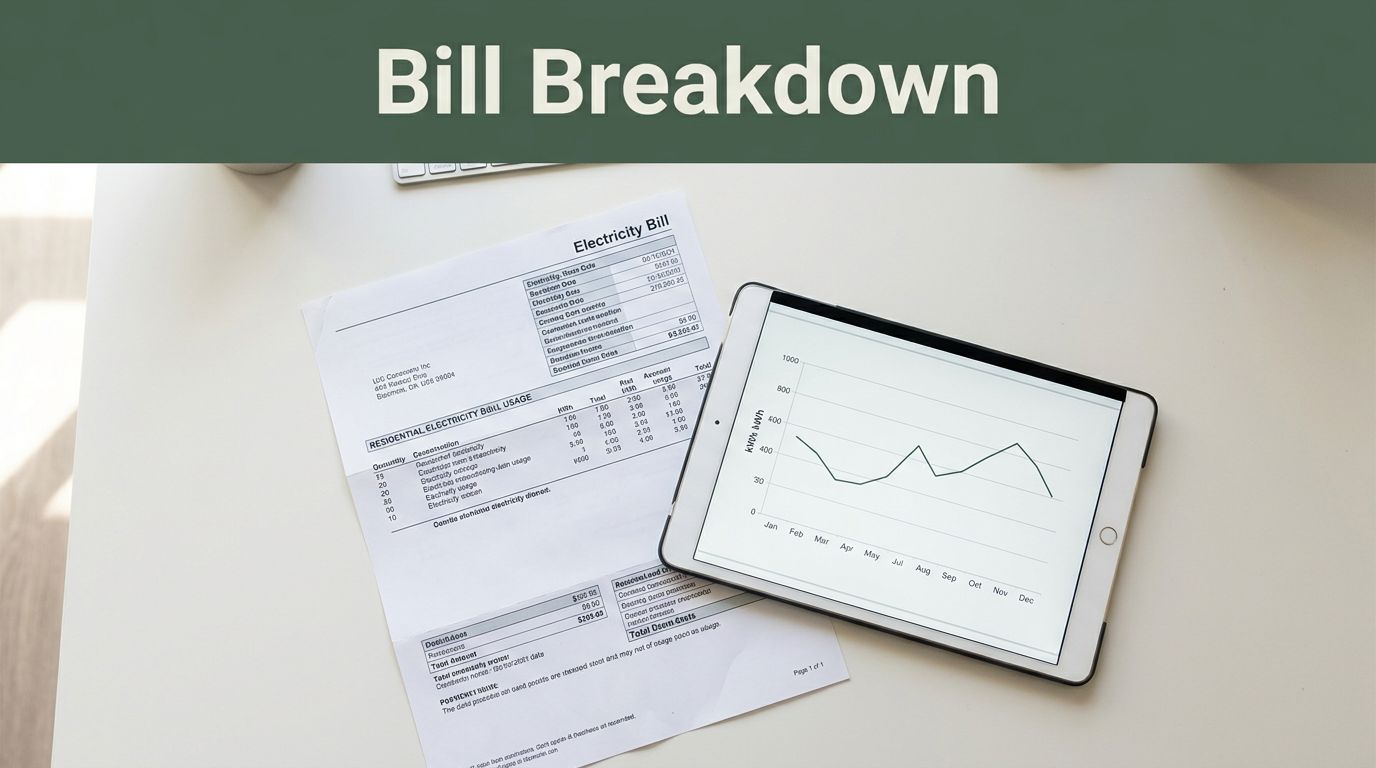
That “normal” month can turn strange fast. One day you open your mailbox and see a $150 electricity bill for what felt like typical use in March 2026.
If you’re wondering, “Where did the money go?”, you’re not alone. Most bills look simple at first glance, but the electricity bill is really a stack of charges. In March 2026, the national average residential rate is about 17.24 cents per kWh, and the typical bill runs around $140 to $160 for roughly 900 kWh of monthly use.
The good news is you can read it. When you understand each line, you can spot errors, track real usage, and find savings that actually fit your schedule and your rate plan.
Here’s a clear guide to read any US residential bill, section by section. You’ll also learn the electricity lingo that confuses people, plus the common mistakes that quietly raise costs.
Break Down Every Line on Your Electricity Bill
Start at the top. Most electric bills follow a similar layout across utilities, even if the wording changes.
Then, zoom out and look for three big things:
- How much electricity you used (usually shown in kWh).
- What you pay per unit (your energy rate and any time-based pricing).
- What else you pay for (delivery, fixed fees, taxes, and surcharges).
If your bill feels like jargon, that’s normal. Utilities often combine generation costs, grid costs, and policy charges. Still, the math should be traceable if you follow the labels.
For a helpful reference on how charges are commonly explained, see the U.S. Department of Energy’s overview of understanding your electricity bills: U.S. Department of Energy bill basics.
A simple way to read the bill is to calculate your all-in rate. That’s your total bill divided by your kWh. It turns a messy page into one number you can compare month to month.
Here’s an example of the math idea. This is not your exact bill, just a clear model:
| Item | Example amount | Example kWh |
|---|---|---|
| Total electricity bill | $150 | 900 kWh |
| All-in rate | 16.7 cents per kWh | 900 kWh |
| Energy you used | 900 kWh | 900 kWh |
Once you see the kWh and the all-in rate, most other lines start to “click.”
Customer Details and Billing Dates
Look for your name, service address, and account or meter number. If you ever call customer service, these numbers save time.
Next, check the billing period dates. Many bills cover about 28 to 31 days. If one month has 31 days, your usage can look higher even if your habits didn’t change.
Season matters too. In hot months, air conditioning can spike demand. In some homes, a change from mild weather to a week of heat can raise use by a lot, even if you keep the thermostat “almost the same.”
A practical tip: compare your billing dates to your own routine. Did you travel? Did you run more laundry? Did you set the thermostat tighter? Then check whether the dates on the bill match those changes.
If you think a bill is wrong, the billing dates and meter read dates are often where clues show up first.
Your Power Usage in kWh
Your bill usually shows total usage in kilowatt-hours (kWh). This is the most important number for most customers.
One kWh equals using 1,000 watts for one hour. So if you run a 1,000-watt space heater for an hour, that’s about 1 kWh. A home uses hundreds of kWh each month because your refrigerator, HVAC system, water heater, lighting, and outlets all add up.
For many US homes, monthly usage lands around 800 to 1,000 kWh. Your bill may also show a graph or daily average. That’s useful because it helps you spot patterns, like evening spikes.
Also, many homes now have smart meters, which can track usage at finer intervals. That matters a lot if you have time-of-use (TOU) rates, because the price changes by hour.
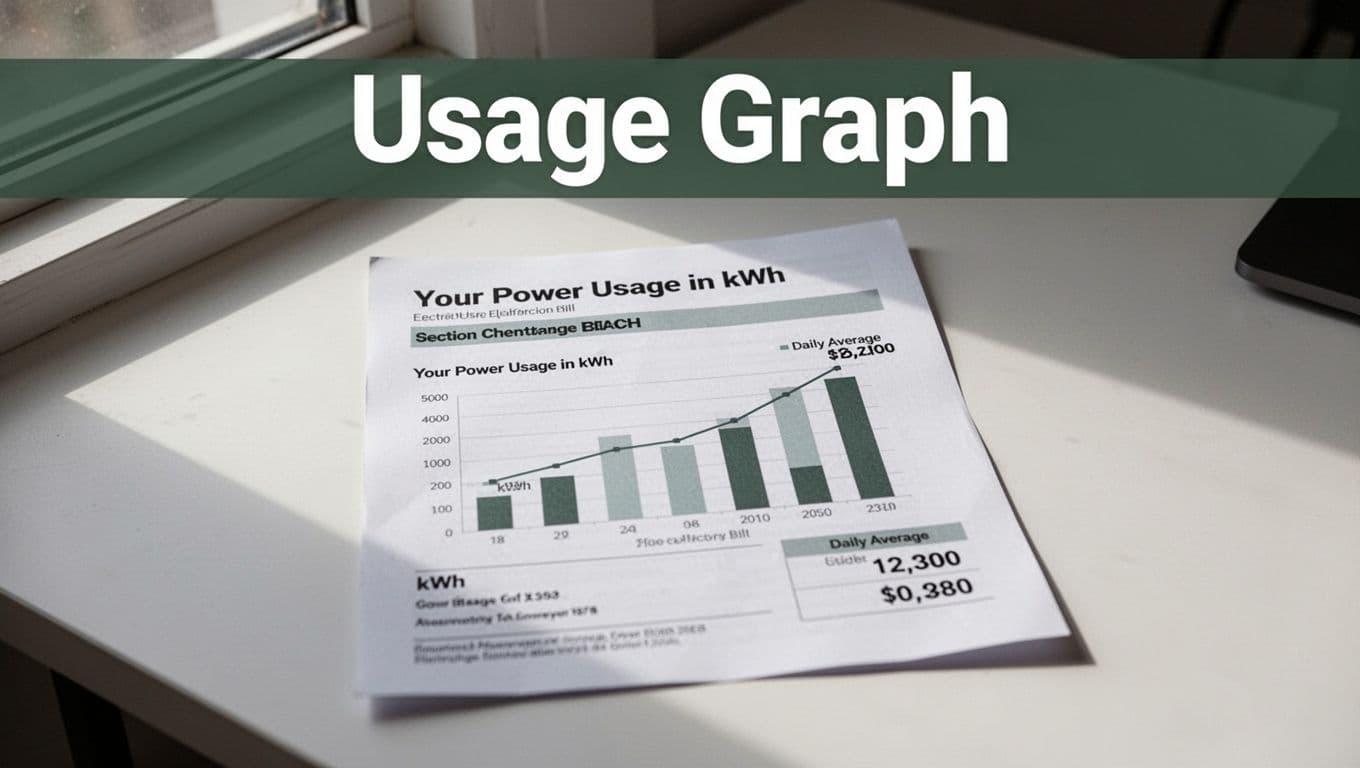
If you only remember one thing from this section, remember this: kWh tells you how much energy you used. Everything else tells you how much it cost.
Supply, Delivery, and Other Charges
Now move to the charge lines. Most bills separate costs into categories like supply, delivery, and sometimes fuel or adjustment items.
Even though the names differ, the idea is consistent:
- Supply: the cost of generating electricity (energy itself).
- Delivery: the cost of moving electricity over wires and maintaining the grid.
- Fixed charges: charges that don’t depend on kWh (like a monthly customer charge).
- Variable adjustments: costs that can change from month to month (like fuel adjustments).
Sometimes you’ll also see tiered pricing. That means the first block of kWh is cheaper, and later kWh cost more. The bill may also show TOU periods, like peak and off-peak.
Demand charges are less common for typical homes, but they do exist in some rate plans. Demand charges can show up when you hit a higher peak, like during hot afternoons when AC runs hard.
Here’s a quick example of how supply and delivery might feel on paper:
- Supply could be based on kWh, like 10 cents per kWh times your total use.
- Delivery might be partly fixed (a monthly amount) and partly variable.
If your total bill increased but your kWh stayed about the same, the change likely came from rates, fees, or taxes, not from your usage.
Taxes, Fees, and the Bottom Line
Near the end, your bill should show taxes and other added items. In many areas, these can run around 5% to 10% of the subtotal, plus extra policy or regional charges.
You may also see:
- Surcharges tied to renewables or grid programs
- Storm recovery charges
- Smart meter or infrastructure line items
Then you’ll find payments, credits, or any past-due amount. Those can change what you owe this month.
Finally, there’s the “Total due” line with a due date. If you have a credit, it should show as a negative line item. If you don’t see it, double-check the account and call if needed.
One gotcha: don’t compare just the total bill across months without checking kWh. Prices and fees can change even if your home energy use stays steady.
Your all-in rate (total bill ÷ kWh) is the best shortcut for comparing months.
Master the Electricity Lingo That Confuses Everyone
Reading your bill gets easier once you know what the words mean. Think of it like translating a map. The map still shows the route, but the labels tell you what’s actually happening.
Here are the most common terms you’ll see.
What kWh and All-in Rates Really Mean
kWh is your usage. It answers, “How much electricity did I use?”
Your all-in rate is the real cost per unit:
- All-in rate = (total electricity bill) ÷ (total kWh)
This rate includes supply, delivery, fixed fees, and often taxes and surcharges. That’s why it’s helpful. It tells you what you truly paid per kWh.
In March 2026, the national average is about 17.24 cents per kWh. Your all-in rate might be higher or lower depending on where you live and how your utility prices power.
State rates vary a lot. For example:
- North Dakota is around 11.02 cents per kWh (one of the cheaper places).
- Hawaii is around 41.62 cents per kWh (one of the most expensive).
- In the Northeast, prices can be higher, like Massachusetts around 31.16 cents per kWh (shown in recent data periods).
So if your bill feels high, it might not be your fault. Your location and your rate plan matter.
TOU, Tiered Rates, and Demand Charges Explained
If your bill uses TOU rates, you’ll see different prices by time period. Usually, peak hours cost more, often in hot evenings when lots of people run AC.
Tiered rates work like volume discounts, but with a twist. Your first block of kWh may cost less, while higher usage blocks cost more. That encourages lower use, especially when demand is high.
Demand charges can look confusing because they aren’t based only on total kWh. Instead, they relate to your highest draw during a billing interval. If your home hits a large peak, the charge can jump.
For a deeper, plain explanation of how peak demand charges work, see: peak demand charges explained.
In addition, more people own EVs and use home chargers. That can raise peaks too, especially if charging happens during TOU peak hours.
Common Bill Mistakes That Cost You Money
Most “high bill” problems fall into two buckets:
- You missed a price or fee line.
- You didn’t match your usage pattern to your rate plan.
Start with your bill lines and your math. Then, compare it to how you lived that month.
Overlooking Hidden Fees and Surcharges
People often stop at the total. That’s where mistakes happen.
Look past the subtotal and scan for extra charges. Some are small each month, but they add up:
- Delivery add-ons and riders
- Renewable or grid program surcharges
- Infrastructure charges tied to storms or maintenance
- Fixed customer charges
Also, fees can change from month to month. If you moved recently, new state rules can apply.
If you want a straightforward guide that walks through major line items, check: electric bill explained in plain English.
Then do one more comparison. If your kWh stayed similar, but your total jumped, the reason is usually not appliances. It’s a rate or fee change.
Ignoring Usage Patterns and Credits
Graphs help, but only if you actually look.
If your bill shows daily usage spikes, ask what caused them. Often, it’s predictable:
- AC running harder during a heat wave
- Electric dryer use on specific nights
- Water heater upgrades or long showers
- Holiday schedules that keep lights on longer
Next, check for credits. Some homes qualify for bill credits tied to energy efficiency, income limits, or renewable programs. If you don’t apply, you might pay more than you need.
Finally, make sure you’re looking at the same thing each month. If you compare one month with a 28-day billing cycle to a 31-day cycle, your usage and totals can differ.
Seasonal swings are real. But you still should be able to explain your month using kWh plus rate changes.
Cut Your Bill with These Easy Action Steps
You don’t need to overhaul your life to cut costs. Instead, use your bill like a dashboard. It tells you what changed and where your money went.
Start with one simple goal: pick one lever you can control this month.
Shift Habits for Time-of-Use Savings
If you have TOU pricing, your best savings often come from moving use.
Try these changes during peak hours:
- Run laundry late at night or early morning
- Delay dishwashing or charging until off-peak
- Pre-cool or pre-heat earlier, then let the system coast
You don’t have to live like a robot. Even small shifts help, especially if peak hours are concentrated in the evening.
Also, check whether your utility offers tools like smart alerts or usage reports. Those can help you see what actually caused spikes.
One extra benefit: shifting use can reduce stress on your budget. When peak pricing hits, the bill can rise fast.
Hunt for Rebates and Shop Around
Some savings come from your utility plan, not your thermostat.
First, look for rebates and programs:
- Weatherization and home sealing help reduce heating and cooling load
- Low-income bill help programs can cut costs directly
- Efficiency rebates can lower energy use over time
Second, confirm whether your plan matches your needs. In deregulated areas, you can often shop electricity supply rates. Your local utility may still handle delivery, but your supplier can change.
If you want a practical guide that supports reading and budgeting for electricity costs, see: how to read your electricity bill.
Finally, review your bill if it looks off. If you want a deeper breakdown of why bills rise, this guide can help you match common causes to your situation: why is my electric bill high.
If you do only one action this month, do this: calculate your all-in rate. Then track it next month. You’ll learn faster than guessing.
Conclusion
That scary moment when you open an electricity bill doesn’t have to end with confusion.
Once you find the kWh, understand the supply and delivery sections, and calculate your all-in rate, the bill becomes clear. You can spot rate changes, hidden fees, and usage patterns that explain the number you see.
So grab your latest bill now. Find your kWh, estimate the all-in rate, and pick one habit to try this month. When costs keep rising, that small step can make your next bill feel less like a surprise.