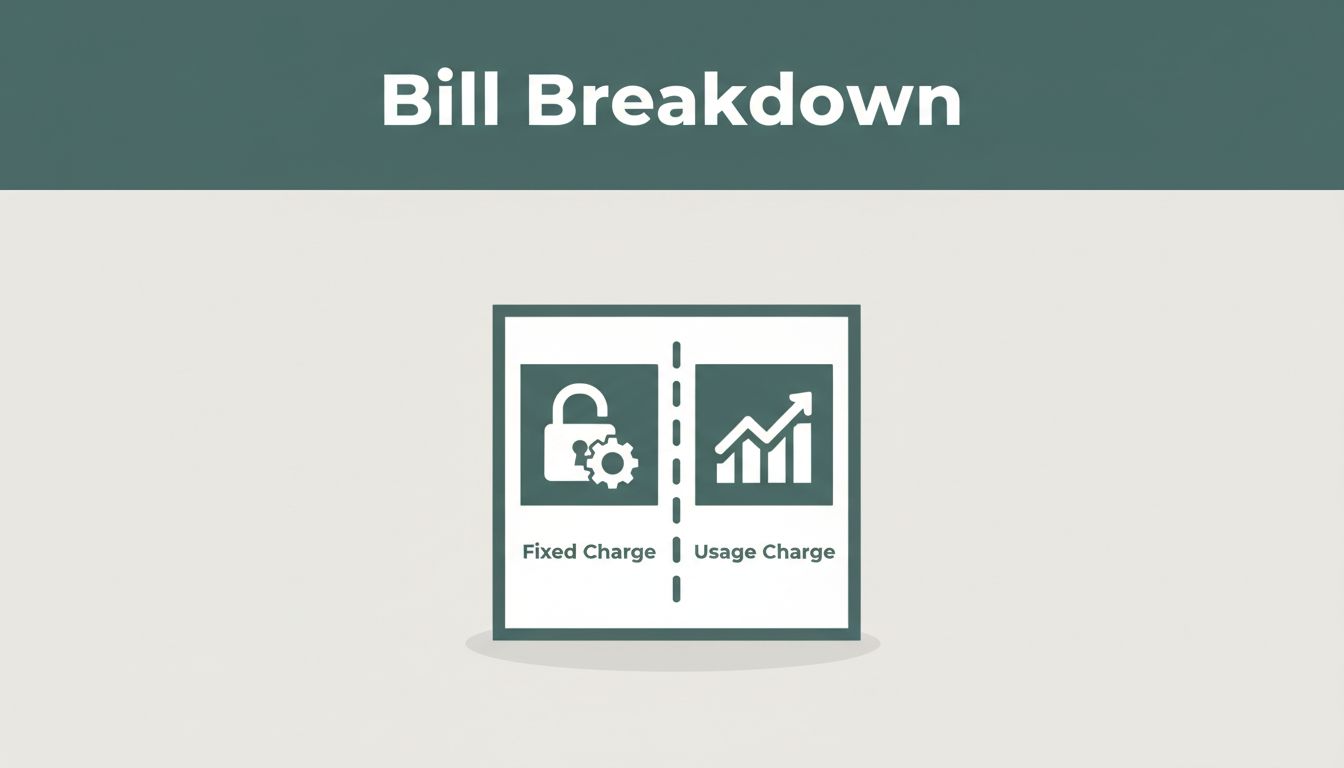
Have you ever checked your utility bill, then used hardly anything, yet the total still felt high? That’s usually the moment fixed charges show up. They’re the steady fees you pay whether you use one unit or a lot.
Usage charges work differently. They rise and fall with what you consume, like kWh, minutes, or GB. When you can spot which part is fixed and which part is usage, your bill stops feeling like a mystery.
In this guide, you’ll learn what fixed charges and usage charges really mean. You’ll also see everyday examples from utilities, telecom, cloud services, and subscriptions. Then you’ll get practical ways to cut costs, plus a look at what’s changing in 2026 for low-usage households.
Ready to take control? Let’s start with the fixed part of the bill.
What Fixed Charges Really Mean for Your Monthly Bill
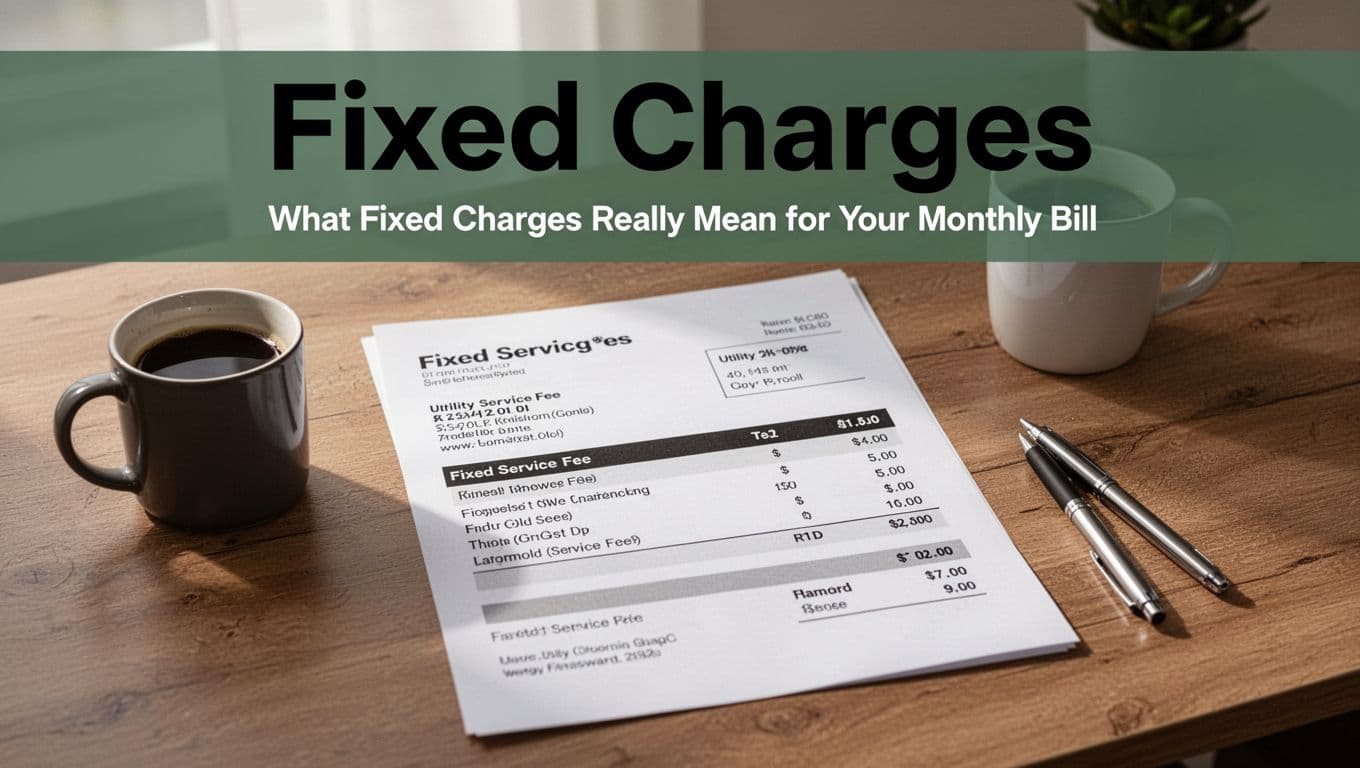
Fixed charges are the fees that stay the same across a billing period. They don’t care how much you used. Even if your usage is low, you still pay for the service to stay available.
Think of fixed charges like “opening hours” for a business. The store still has to be staffed, even on slow days. For utilities and many other providers, fixed fees help cover costs like infrastructure, maintenance, billing systems, and customer support.
That also explains why fixed charges often appear near the top of your bill. They’re the foundation charge. Then your usage charges sit on top.
You’ll often see fixed charges in ranges like $15 to $25 per month for many residential plans. Telecom may show line or network fees. Cloud billing may include base charges tied to capacity or a minimum plan tier. Subscriptions usually have a plan fee before add-ons.
Here’s a quick view of what fixed charges typically cover:
| Service type | Common fixed charge | What it pays for |
|---|---|---|
| Utilities | Meter or “service availability” fee | Grid access, meter upkeep, support |
| Telecom | Line or device/network fee | Connection costs and network access |
| Cloud | Base instance or minimum tier | Reserved capacity and platform access |
| Subscriptions | Plan base fee | Core access, then add-ons on top |
In 2026, fixed charges are especially noticeable in electricity bills. Some states and utilities are redesigning rates to recover grid upgrades through higher base fees. For a concrete example, see California’s 2026 fixed charge.
Fixed charges make budgeting easier, and that’s their biggest plus. Still, they can feel unfair if you’re a low-usage customer. You can conserve, yet the bill doesn’t drop as much as you expect.
Everyday Examples You See on Bills
Fixed charges show up in many places, not just electricity. Once you know what to look for, you’ll spot them fast.
Here are common examples you might see on a bill:
- Utilities: “Service charge,” “meter fee,” or “base services.” These show up even with minimal kWh usage.
- Telecom: “Monthly line access” or a similar line item that keeps your connection active.
- Cloud services: A base charge tied to a minimum plan or reserved capacity. Usage still adds more later.
- Subscriptions: The plan fee for your core tier. Add-ons, like extra screens or premium features, can raise totals.
Example snippet (simplified):
- Fixed Charge: $18
- Usage Charge: $32.40 (based on consumption)
The mix matters. Two bills can have the same total fixed fee, but very different usage charges. Meanwhile, two bills can have similar usage, yet different fixed fees due to how each provider structures pricing.
Also, fixed charges can be seasonal sometimes. Some utilities add extra line items tied to time-of-year programs. Even then, the charge still doesn’t depend on how many units you used that day.
So ask yourself a simple question the next time you open your bill: “What part is the same no matter what?” That’s your fixed charges, and it’s where you start planning smarter.
Usage Charges Explained: Why Your Bill Fluctuates
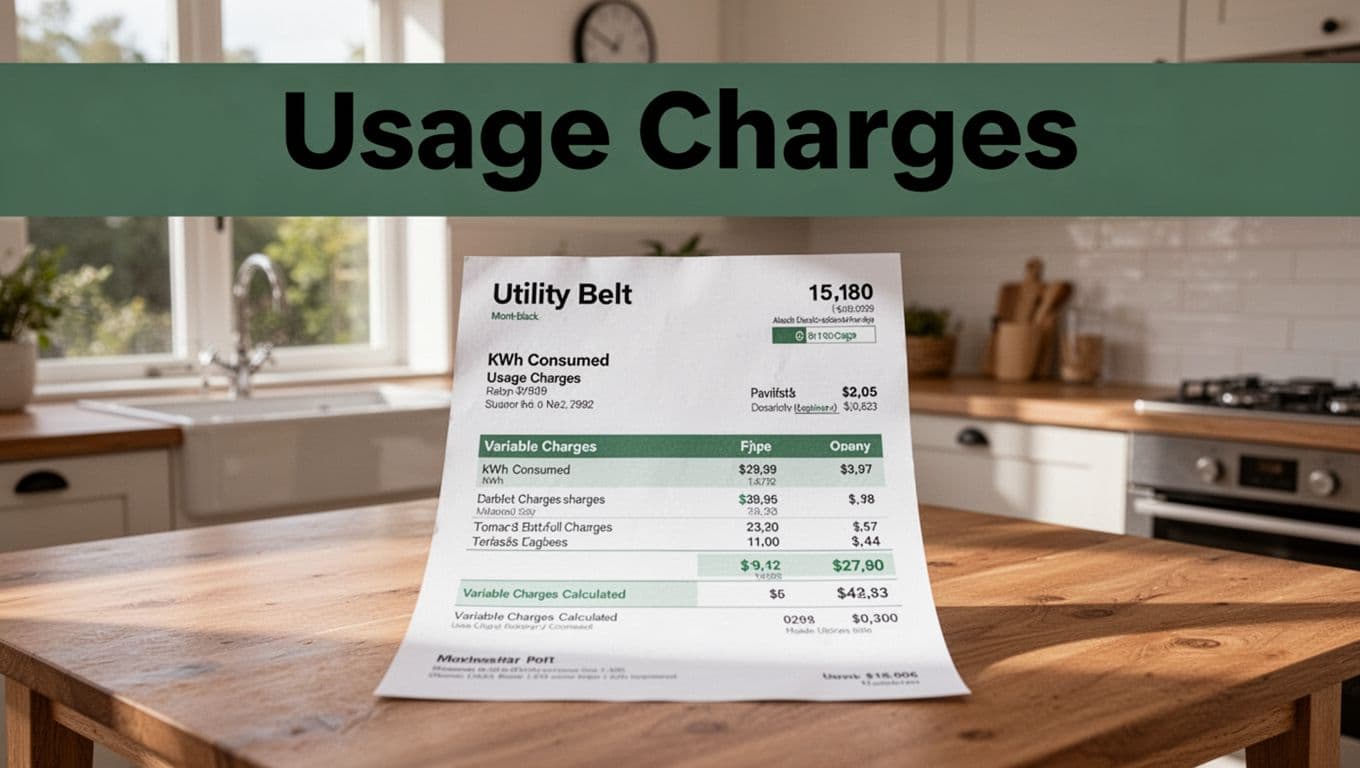
Usage charges are variable fees based on consumption. If you use more, you pay more. If you use less, the usage part of the bill should shrink.
That means usage charges are often measured in clear units. For utilities, it’s usually kWh (electricity) or gallons (water). Telecom may measure minutes, messages, or data. Cloud services commonly measure GB, requests, or compute hours. Subscriptions can even use “usage premiums” if your plan includes limits.
Because usage-based pricing tracks your behavior, it can reward efficiency. Turn down the thermostat, cut data overages, or run fewer cloud jobs, and your variable charges usually respond.
However, usage charges can also create surprises. A spike in weather, travel, or a larger file download can push your bill up fast. That’s why usage charges often feel “unpredictable,” even when the rate is stable.
A good baseline definition is usage-based billing basics. It explains the core idea: you pay based on what you actually use.
Here are sample usage charge formats you might recognize:
- Electricity: $0.12 per kWh
- Water: $5 per 1,000 gallons
- Telecom data overage: $10 per 50 GB
- Cloud transfer: $0.10 per GB transfer
A real-life feel for this: imagine a summer month with an unexpected heat wave. You may run the AC more than normal. Your fixed charges might stay the same, but your usage charges jump. Your bill rises, and it’s easy to blame the whole bill, even though only part changed.
Typically, the bill shows fixed charges first, then a usage breakdown. Once you separate the two, you can predict how future changes will affect your total.
Real-World Cases from Power to Streaming
Let’s make usage charges feel real with a few quick scenarios.
For utilities, say you use 300 kWh in a month. If your rate is $0.12 per kWh, the usage part looks like:
- 300 kWh x $0.12 = $36
Utilities usually bundle this with other adjustments too, like taxes or delivery factors. Still, the “per-unit” math is often the heart of the fluctuation.
For telecom, usage charges can show up as data overages, international add-ons, or premium messaging. Many plans have a base tier, then you pay extra once you cross the limit.
Cloud services often feel similar. If your workload runs longer, your bill rises. If you store large files longer, storage charges add more too. Compute-heavy tasks can also raise costs even when traffic is low.
Streaming is a simpler version of the same idea. Most subscription plans have a fixed base fee. Then usage-linked premiums can appear as extra features (like higher resolution), device add-ons, or limited “download windows.” If you stream in 4K often, some services push you toward higher tiers.
Here’s a simple bill format pattern you’ll see across many providers:
- Fixed fees: steady, same every month
- Usage fees: per-unit or per-minute or per-GB
- Adjustments: taxes, credits, and one-time promos
Once you see it this way, you stop guessing.
Fixed vs Usage Side-by-Side: Spot the Winners and Losers
Here’s the big difference in plain terms:
- Fixed charges stay steady.
- Usage charges move with your behavior.
This difference affects who “wins” financially. Low-use customers often feel fixed charges more. Heavy users often feel usage charges more.
Also, providers use different models to balance costs. For a broader view of pricing structures, see technology services pricing models. It breaks down fixed-price, usage-based, and subscription approaches.
The clearest comparison looks like this:
| Category | Fixed charges | Usage charges |
|---|---|---|
| Price behavior | Same each month (or period) | Changes with consumption |
| Main goal | Cover access and readiness costs | Match cost to actual use |
| Best for | People who stay near a baseline | People who can control usage |
| Main risk | Bills don’t fall much when you conserve | Bills spike when usage rises |
| Where it shows | Early line items on the bill | Detailed “usage” breakdown lines |
So, what are the “winners and losers”?
- Low users can get trapped by fixed fees. Even great habits won’t fully lower the total.
- Savers often benefit from usage charges. If you reduce usage, you see a direct impact.
Also, the bill layout helps you. Most bills clearly separate fixed line items from usage totals. If you take two minutes to label which lines are fixed and which lines are usage, your next budgeting month gets easier.
Pros, Cons, and Which Fits Your Lifestyle
Both charge types have a role. They just fit different lifestyles.
Fixed charges pros
- Predictable total budgeting.
- Covers core service, so the system stays ready.
Fixed charges cons
- Less reward for low usage.
- You may pay the same even after you cut back.
Usage charges pros
- Fairer in theory: use more, pay more.
- Encourages conservation and smarter timing.
Usage charges cons
- Can feel unpredictable when weather or travel changes.
- Heavy users can face higher bills quickly.
If you’re a household that uses less, you generally want lower fixed fees or plan flexibility. If you’re a household that uses more, you usually want lower per-unit rates and better usage controls.
The “best” bill is the one you understand. When you can classify the charges, you can choose the right levers.
Cut Costs Now: Actionable Tips for Fixed and Usage Charges
Now for the practical part. You don’t need a spreadsheet to start saving. You just need a simple plan.
Start with the bill itself. Then choose one lever for fixed charges and one lever for usage charges. Small moves add up over time.
Here’s a set of steps you can do in under an hour:
- Circle the fixed charge lines on your bill (service fee, base fee, line fee).
- Add up the usage charge lines separately (per-unit totals, overages, variable portion).
- Track the pattern for 2 to 3 months. Fixed should be stable. Usage should swing with behavior.
- Compare providers or plan tiers if fixed charges feel too high.
- Reduce usage at the easiest points first, like timing, device settings, or data caps.
- Review promos carefully. Some “discounts” reduce usage, but leave fixed fees unchanged.
For subscriptions and many tech services, pricing can be “hybrid,” meaning you pay a base plus some variable usage. Providers may offer this to keep costs fair while still giving predictability. If you’re dealing with subscription billing, this hybrid pricing guide can help you recognize what’s really going on.
Finally, watch for one hidden issue. Your bill might change because of a plan update, not because you used more. That’s why a quick monthly review matters.
Tame Fixed Fees with Smart Switches
Fixed charges can feel stubborn. Still, you often have options.
First, shop providers, especially when a competitor offers a lower base fee for your area or your tier. If you bundle services, check whether the “discount” affects the fixed portion or only the usage portion. Sometimes the usage discount looks bigger, but the fixed fee stays high.
Second, ask about low-income or hardship programs if available. Some utilities and telecom plans offer credits that reduce base fees. Even a modest reduction can help if you’re a consistent low-usage customer.
Third, if your bill shows the fixed charge is more than a big chunk of your total, switch plans. A good rule of thumb is to compare total monthly cost, not just the per-unit rate.
Slash Usage with Everyday Habits
Usage charges respond to behavior, so you can win here.
Start small and aim for consistency:
- Use timers for high-use devices when you can.
- Switch to efficient lighting and set sensible temperature ranges.
- If you monitor data, avoid overages by changing habits first, not by buying bigger plans.
For utilities, timing matters sometimes. Time-of-use rates can move the cost of kWh. If your provider charges more during peak hours, shifting usage can lower the usage part of your bill.
For telecom, keep an eye on background apps. Many “mystery” data spikes come from updates and uploads you didn’t plan.
For cloud services, schedule heavy jobs off-peak when possible. Also, clean up unused resources. Unused storage and idle environments often build up.
If you do just one thing this week, do the simplest one: check your bill, then find one usage driver you can control.
2026 Billing Shifts: What Low Users Need to Watch
In 2026, low-usage households face a key tradeoff: fixed charges can rise even when you conserve. Utilities have major grid costs, and they spread those costs across customers through base fees.
At the same time, many providers still keep meaningful portions of your bill variable. So conservation still matters, just not always as much as you hope.
One big trend is “better rate design,” where utilities try to match cost drivers with pricing. That can lead to time-of-use adjustments and base fee changes. In some states, bills now include higher base components that reduce the per-kWh price, or shift how costs are shared between homes.
To understand the broader rate environment for 2026, check utility rate trends for 2025 and what to expect in 2026.
What should you do with this information?
- Keep conserving, but expect your fixed portion to stay steadier than your usage portion.
- Re-check your plan every few months. If your usage stays low, switching tiers can still cut totals.
- Treat subscription and tech bills the same way. Many services now bundle base access with usage-based extras. If you’re light-usage, you want the smallest base that still meets your needs.
The good news is clear: if you identify what’s fixed vs variable, you’re less likely to be surprised.
Conclusion
Fixed charges and usage charges work like two different pieces of your bill puzzle. Fixed charges stay steady, even when you use less. Usage charges rise and fall with what you consume.
Once you separate them, you can make smarter choices. You can shop or switch to reduce fixed fees. Then you can cut variable costs with small behavior changes.
In 2026, low-usage households should pay extra attention to base fees, especially in utilities. But your habits still matter, because usage charges still respond.
Grab your latest bill and find the fixed lines first. Then ask, “What’s changing, and what isn’t?” If that sounds like your situation, you’re already on the path to a more predictable month.